

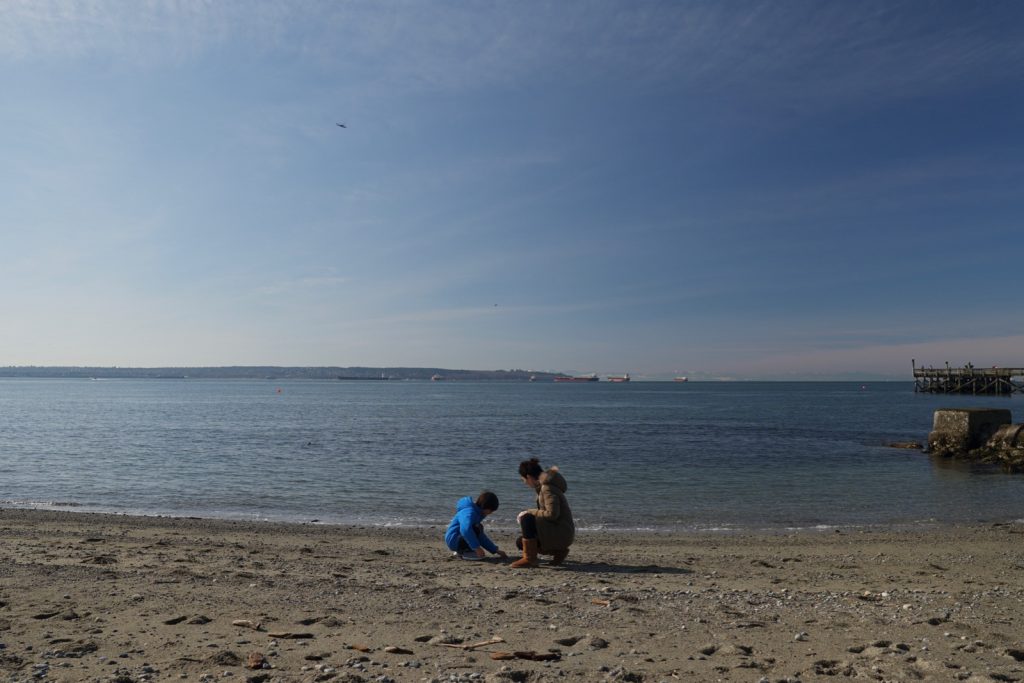
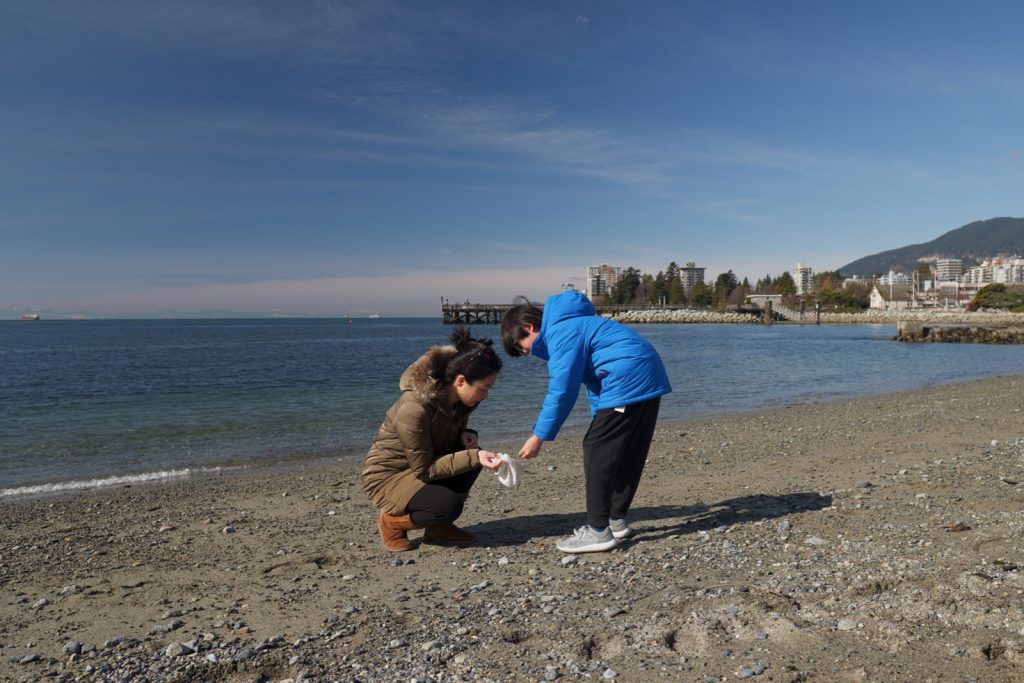
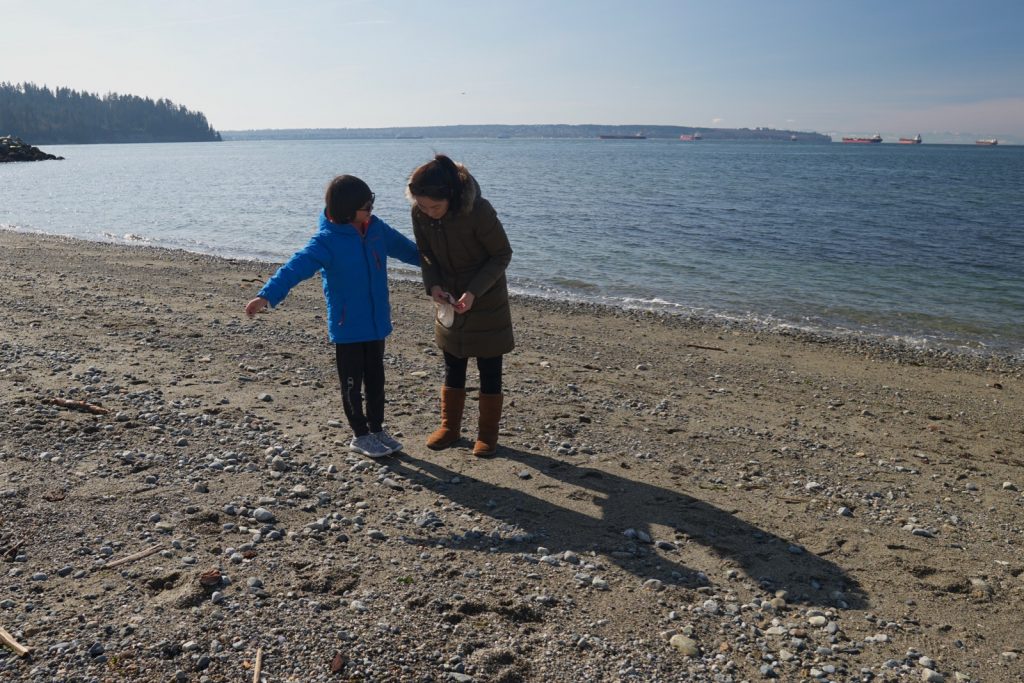
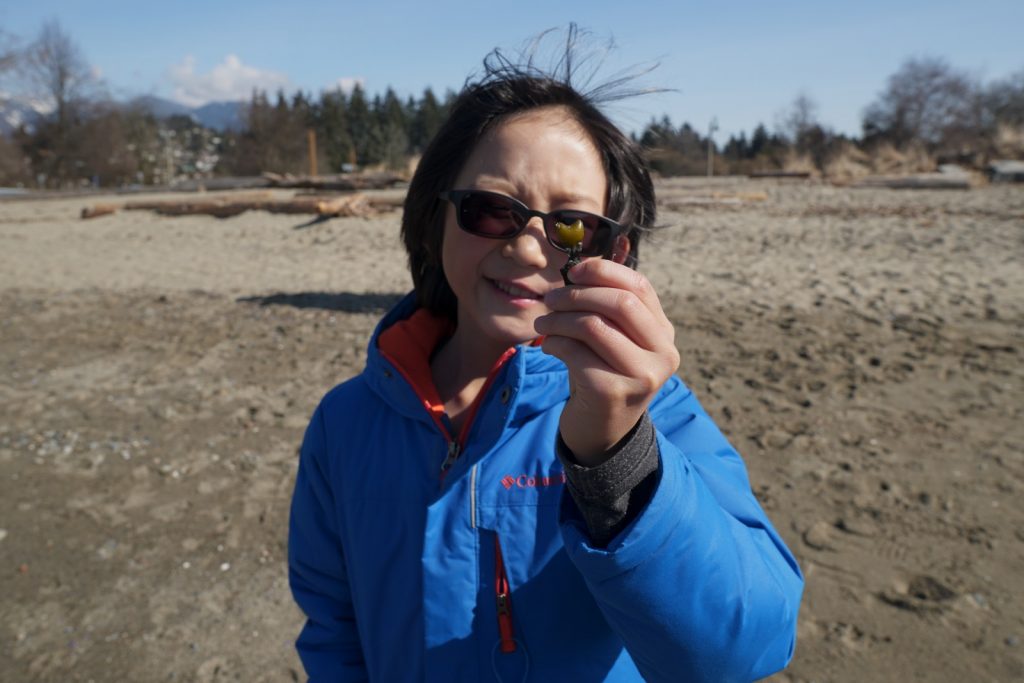
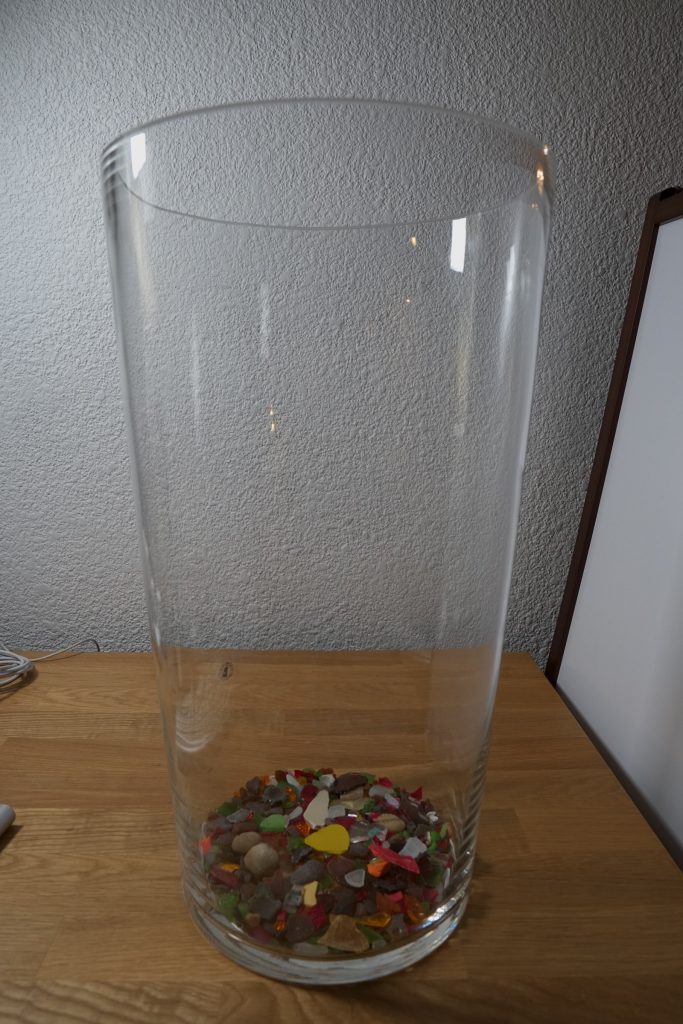
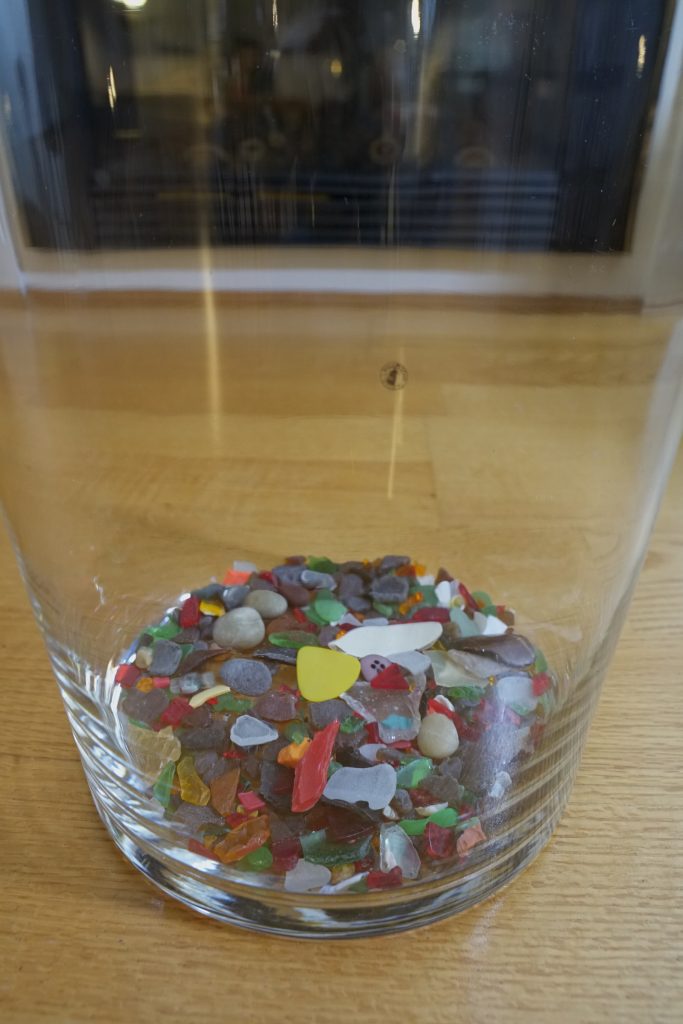
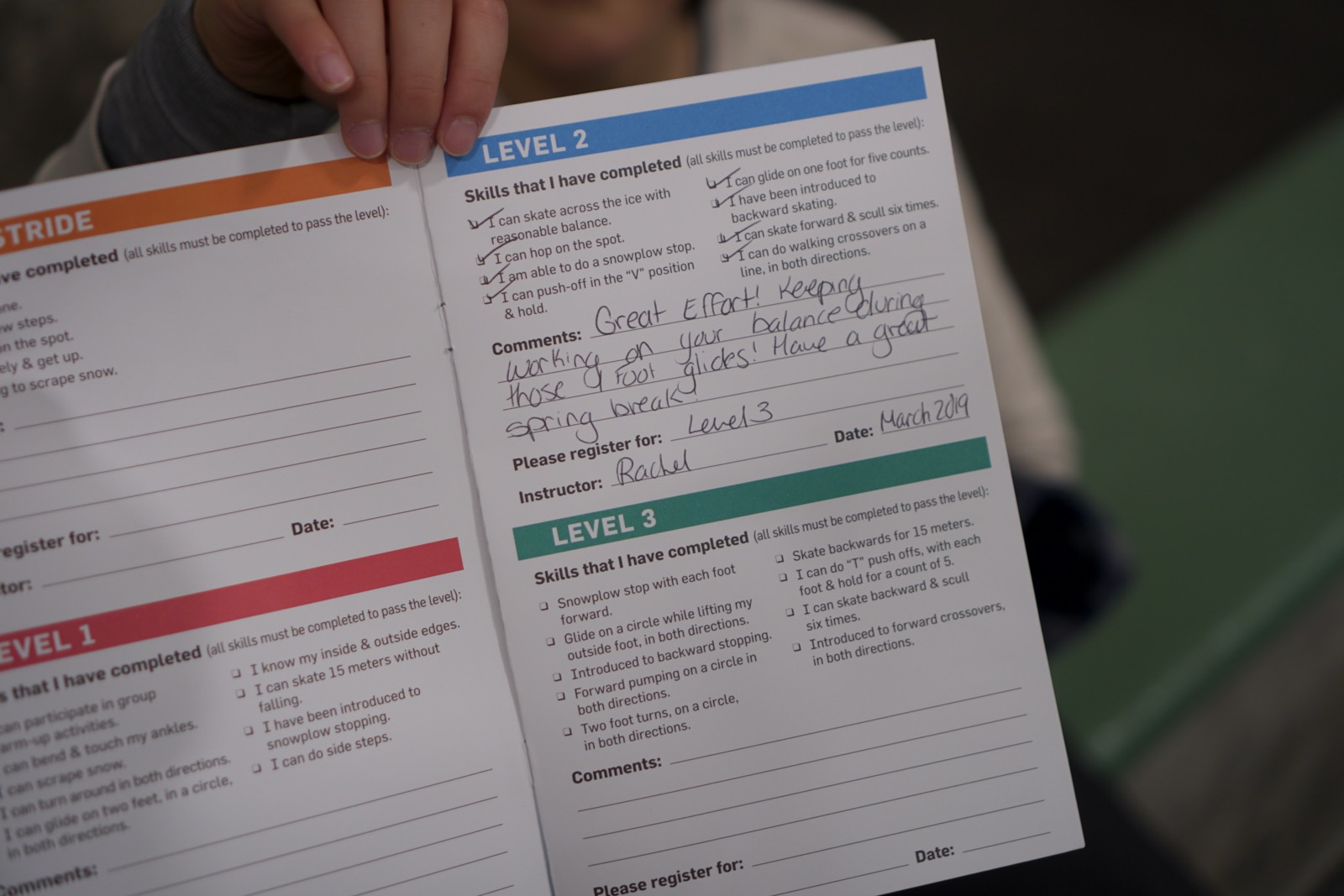
The week started with searching for glass on the beach on Sunday and ended with another week full of activities and learning for Ethan.
March 10
On Sunday morning, we woke up to another amazingly sunny and beautiful day so we headed to the beach once again.

March 11


March 12


March 13


This week at nature school, Ethan had a substitute teacher named Anna. Here’s what she emailed us…
Anna’s Group (subbing for Scott):
Today was all about group challenge and invention. We started out by walking to the place called ‘Eagle Island’. Along the way we observed the changes in snow/ice cover from the previous week, and what it told us about different parts of the forest- for example, slushy or dry areas that we now know receive more sun (or retain more heat) than icy areas. does this affect what type of plants grow there, for example?
When we arrived at the island we set ourselves up for our first group challenge: Flying Squirrels avoiding capture by a Spotted Owl (an old-growth forest specialist that relies on sound to locate their prey). Working as a team, the squirrels successfully made their way from one end of the forest with their food cache (a mixture of seeds and insects) to the other. Stealth and collaboration were key skills that were used to escape the owl’s keen listening ability and reach home safely.
In the next group challenge we found ourselves more puzzled, however. The simple task was to lower a 4ft long, lightweight branch to the ground with all five of us maintaining contact (with a single finger from below) the entire time. Surprisingly, this brought about some bewilderment and frustration! How was the stick floating up away from us instead of what we were aiming for!? Was someone pushing it upward? Or was it a combination of minute movements by all of us? Perhaps more trust in each other and fine-tuning of our motor skills could bring us future success in this actually very difficult task. And maybe it teaches us something about group dynamic, the way we are all contributors to what’s going on, all the time,whether we feel it or not.
After breaking for lunch we came together for our next group challenge- problem solving the simple query of how to pass a stick around our circle without using our hands (then only using our lower body, then only using one foot, then using only our heads). Some times we invented ways to make it easier, using our brains to problem solve within the parameters; other times we relied on sheer balance and focus.
We also played a round of Fire Keeper (another stealth challenge) and a game where Grizzly Bears raced against the clock to bring back food from their territory before a new highway blocked it’s access.
Everyone was keen to stay at the island for the last part of the day, so we invented new ways to make ice boats and then created “magic moving fir cones” with Douglas Fir cones and the fishing line that we found. This was also a great opportunity to remember what trees we shared the island with, based on the type of cones that were available to us (mostly Douglas Fir and Hemlock cones).
As we left the island we had the opportunity to skate our way back along sections of the path, meet other groups doing knots and camoflauge, and share a bit of our day with our friends.
Finally, at night…
We’ve continued to read Twenty Thousand Leagues Under the Sea. It’s a fun book with lots of colourful language to make us imagine what the characters are experiencing and seeing.
March 14


We finished the day by reading Twenty Thousand Leagues Under the Sea.
March 15


March 16
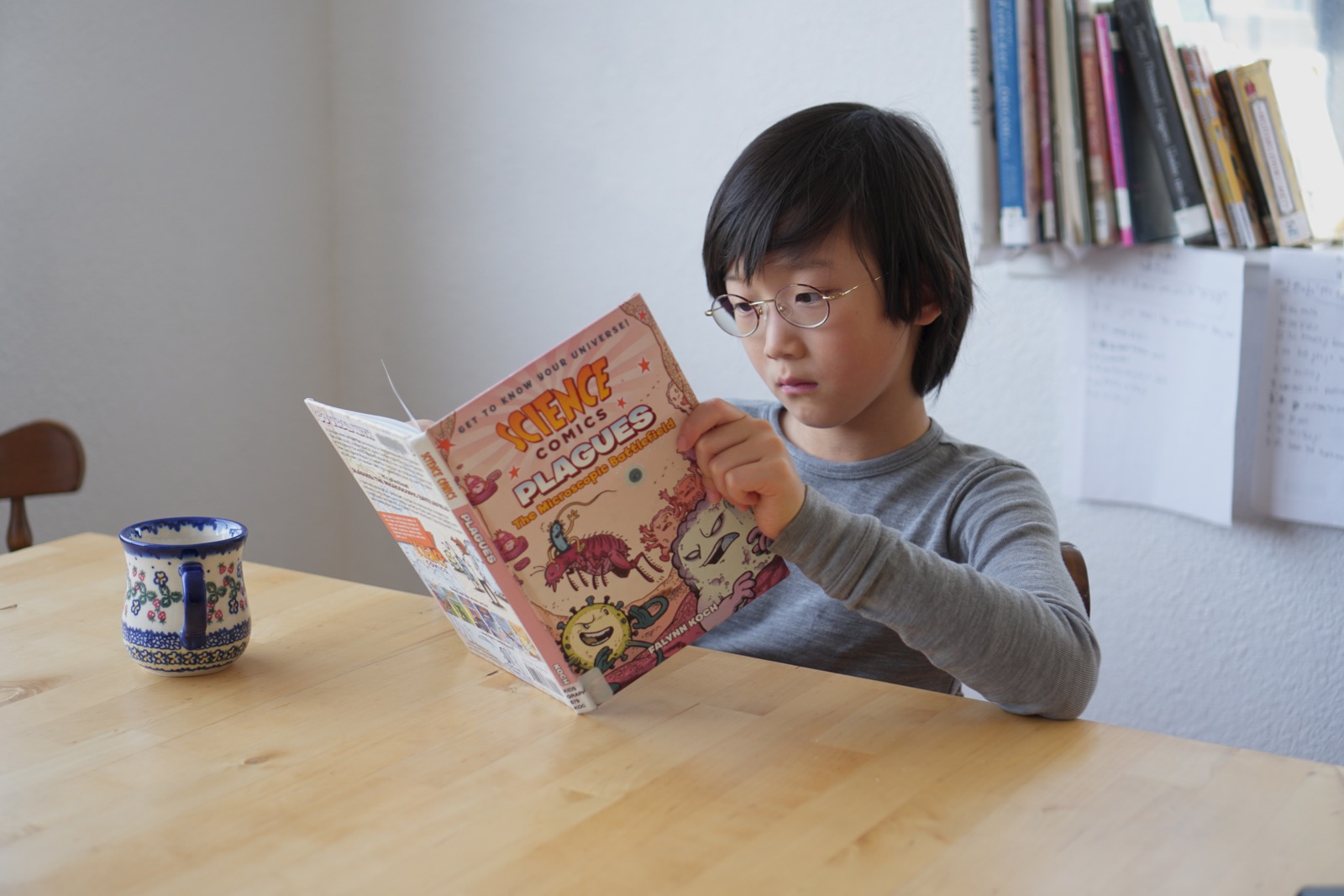


After we got the felt pens for Ethan it was like opening up a new world of creativity for him because of all the colours. He also continued expanding his knowledge of math and did a great job with his writing, too.
I told a couple other parents about unschooling this past week, as I usually seem to end up doing. I hope to inspire other parents to look at the options available for their children.
Anyway, let’s see how this next week goes for Ethan.
Thanks for the great feedback once again.For the history, the plan is to have him go through the book he has and then go through it again in more detail and to pull from other resources at that time.We have occasionally brought in additional books or watched documentaries if it seems like Ethan has an interest in something. The cross-section drawing…Ethan mentioned that he was already thinking about making a bigger version :)The editing tips are really helpful, as is going back to look at his past work.Maybe Ethan will make a video to answer your questions about the Big Bang and expansion of the universe. We’ll see.Thanks.
Thank you for your note, I am honored to be of any support that I can as Ethan’s LC. As per my recent responses to Ethan’s week I am choosing a few highlights to expand on and explore:
-
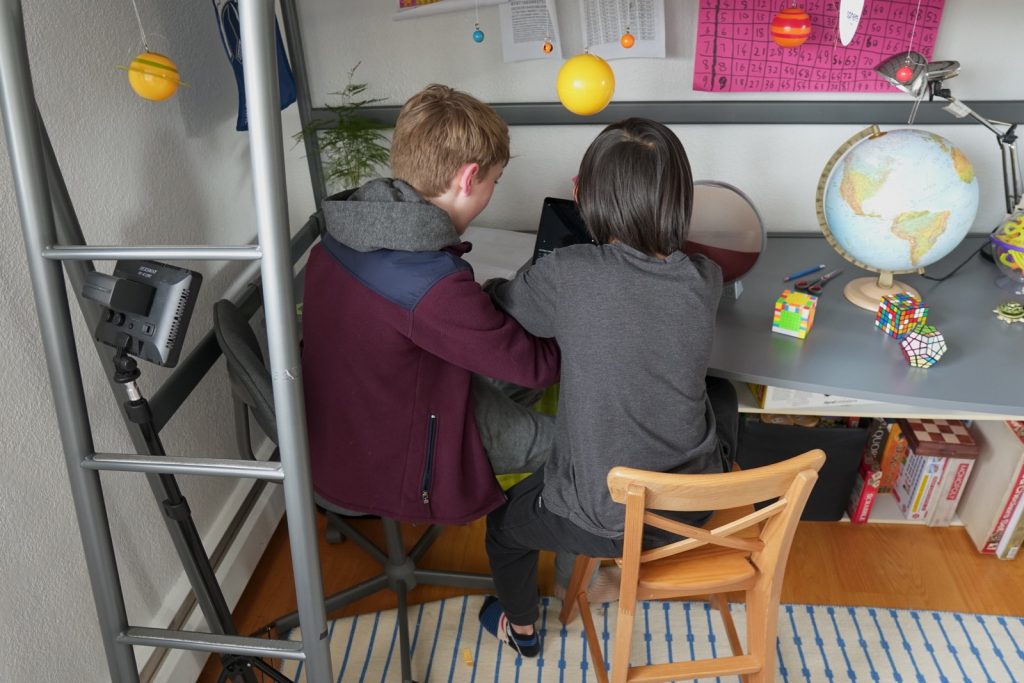
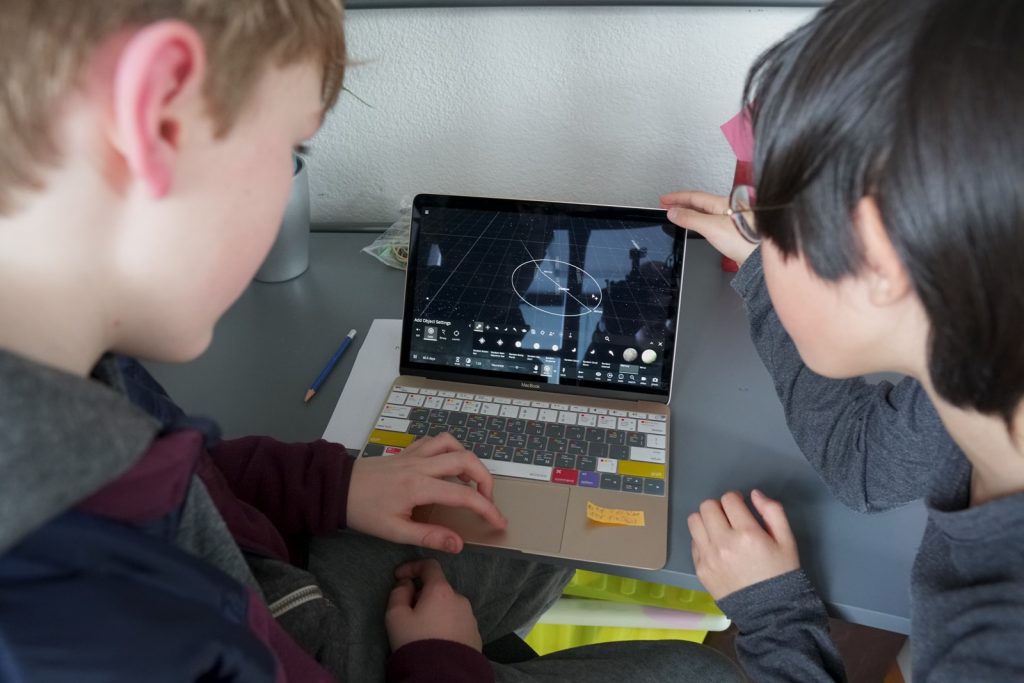
He then drew cross sections of the galaxy all the way down to our home, the table and this drawing.
Now these images are fascinating to me. I would love to see more of his corss section of the galaxies pictures. I want to learn more from Ethan!What is he basing this on? Did this information come from other sources? A few questions for Ethan to answer I guess. Maybe he can draw these on a large piece of paper so he has room to expand the cross sections. I see a wonderfully animated film about this in his future. I am impressed beyond words as to how he can visualize and then depict the relative size and placement of these celestial bodies. Ethan: what do you know about the Big Bang Theory? What are your thoughts on the creations and expansion of the universe? Here are two articles on the same Hubble image showing a cross section of the universe:https://scitechdaily.com/hubble-image-reveals-cross-section-view-universe/https://earthsky.org/space/new-cross-section-of-the-universe

He learned more about the Incas and then wrote about how the Incan Empire fell to Fransisco Pizarro in the 1530s.For history, he started learning about medieval India and wrote a short summary about what he learned.Is Ethan mostly writing summaries about the history he is learning?I notice he often uses one main source for his information. Does he research more topics which interest him or get other books from the library? Let me know if there is any particular time period he would like to delve into more and maybe there are other writing assignments I could offer.Do you ever pose questions for him to answer in his writing? There are many examples you can find online, for example:
-
Who were the Inca? How did they maintain their vast civilization?
How did the Inca increase the amount of arable land available for agriculture in their mountainous home region?
Describe the expansionist policies of the Inca rulers. How did they “grow” their empire?
How did the rulers of the Inca empire maintain order? How did they control the population of the nations they defeated militarily, the majority of whom were not ethnically Inca?
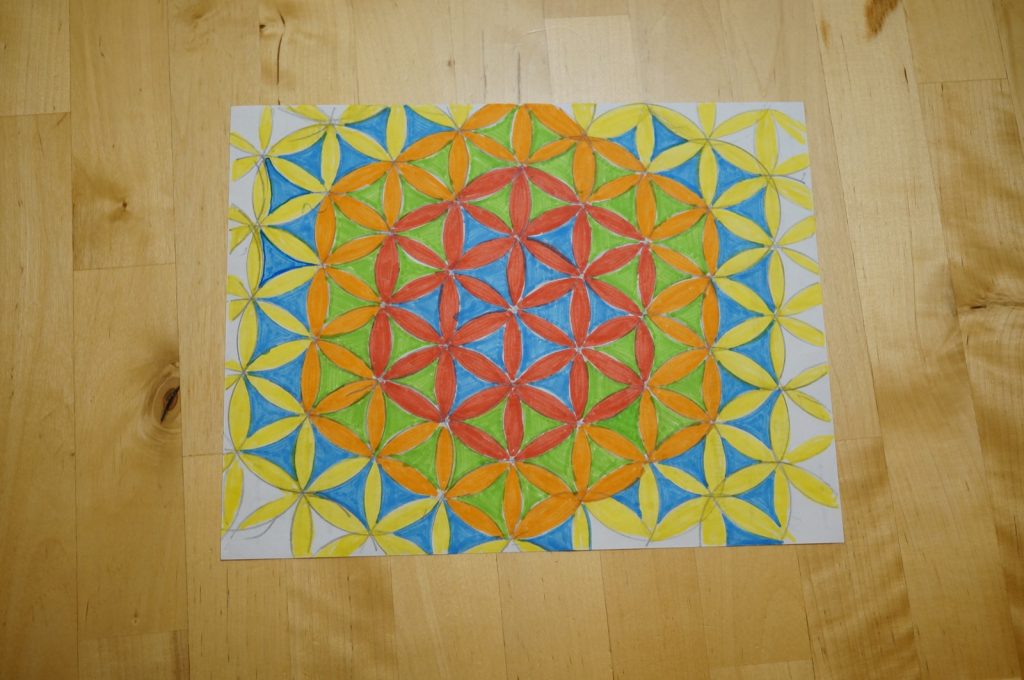
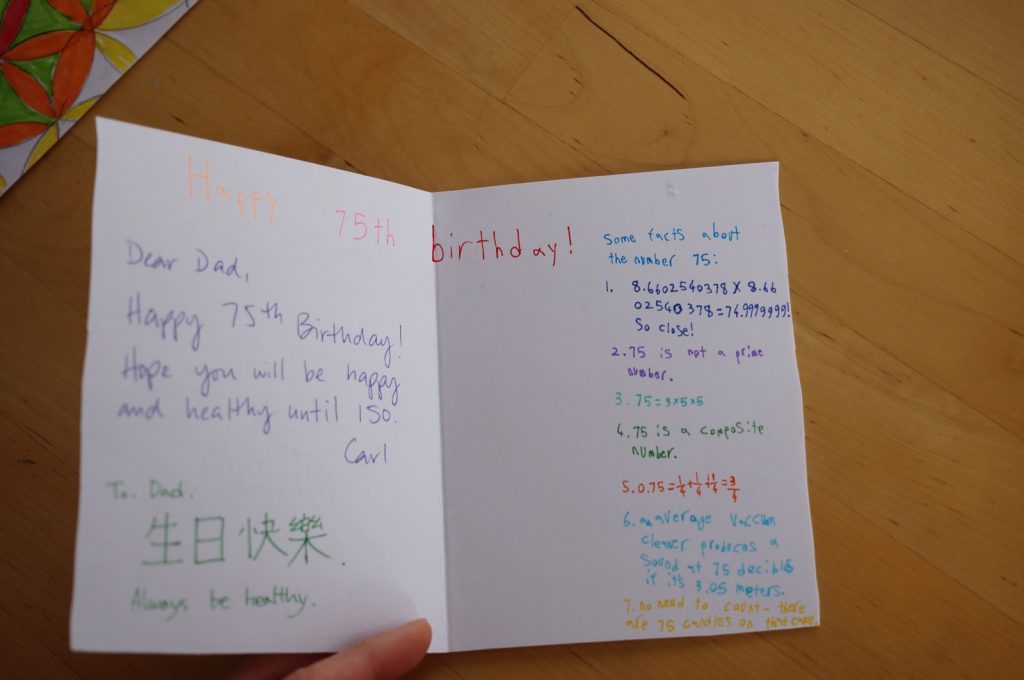
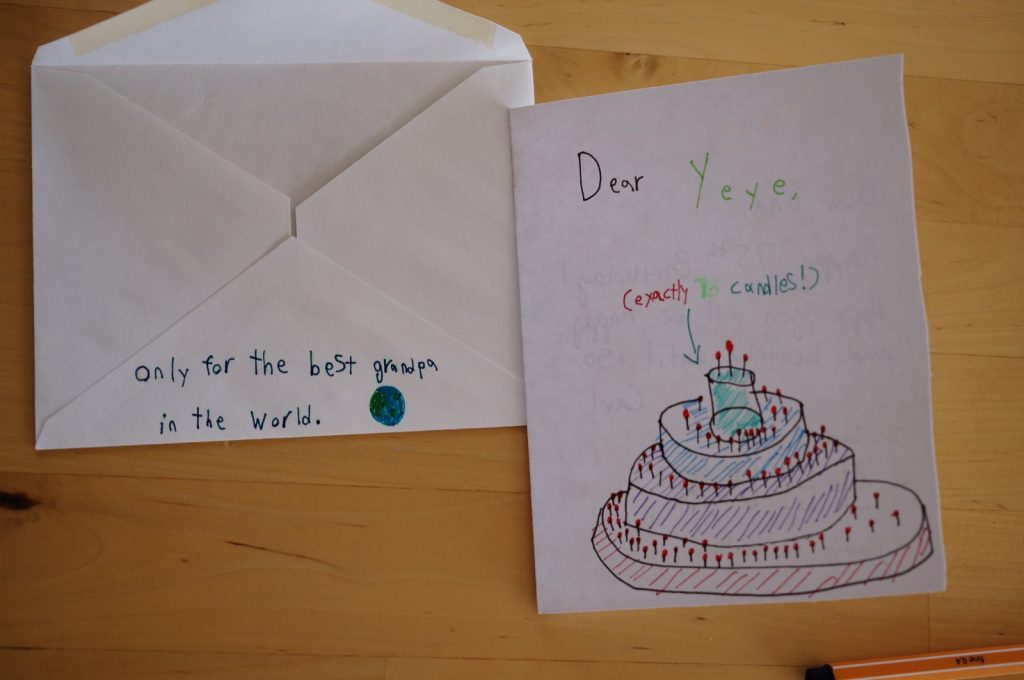
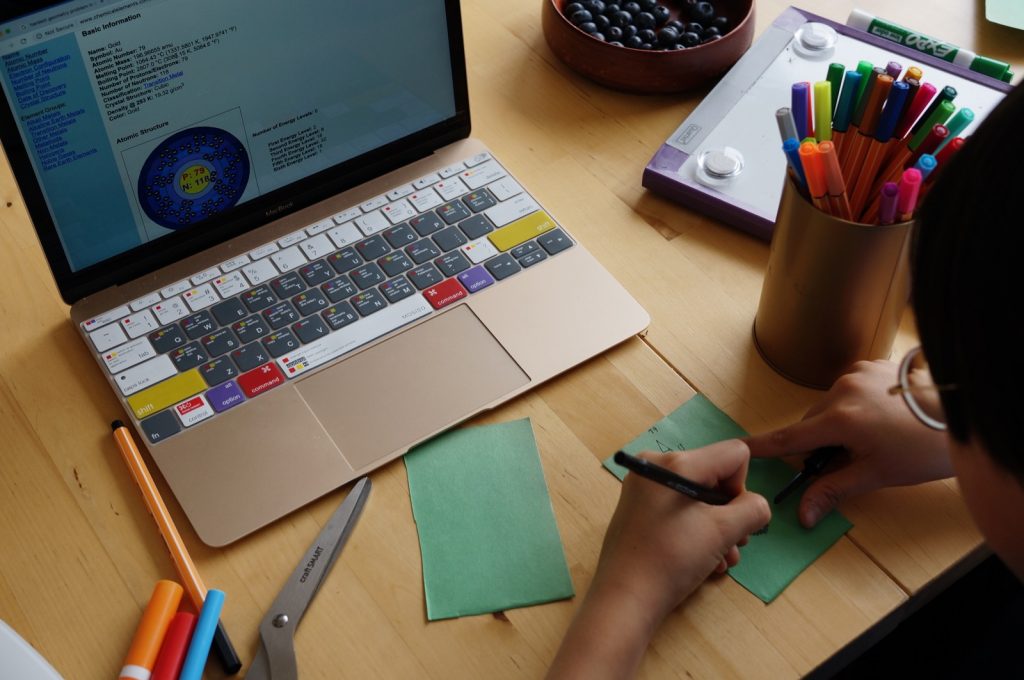
He borrowed some felt pens of mine and used them quite extensively to write about salutations and valedictions. It looks like he had fun writing these.He answered comprehension questions about the Incas. He’s asking me to point out spelling errors nowadays, which is a big change.Dong Eun used the new pens to colour in Ethan’s earlier overlapping circle pattern. They decided we would make special occasion cards using these types of patterns.Ethan is really blossoming in several learning areas from writing to art with these new pens! I suggest giving him a set of color pencils as well. They can offer even more possibilities in terms of shading and blending colors as well. I always really enjoyed the pencil drawings of Waldorf students…

Self-Editing Is Hard!
During self-editing, a writer reads and re-reads his rough draft. As he does, he finds ways to improve structure, flow, and word choice. And of course, this is the time to get serious about conventions such as spelling, punctuation, and capitalization.Sounds easy enough, right? So why do kids have such a hard time identifying errors in their own writing?
-
They really don’t see the mistakes. When we read, we think we see every word and punctuation mark, but in truth, most of us read in chunks. Our brains are funny that way.
They fail to see self-editing as an essential part of the writing task. At best, they consider it unnecessary. At worst, they view it as punishment.
They feel attached to their writing. To most kids, it really is personal. Looking for errors is no less painful than, say, plucking out an eye.
They attempt writing and self-editing in the same day. Writers—and not just kids—often don’t put enough space and distance between themselves and their writing piece before beginning the self-editing process.
Seven Self-Editing Strategies for Homeschool Writing
Self-editing, like any other process, must be developed. Here are just a few tips and tricks you can try.
1. Just Write
Tell your child not to worry about self-editing during the first draft. The important thing is just to get the words down on paper.
2. Make a Copy
Let children edit a photocopied version of their paper. This is especially effective with elementary-age kids who feel anxious about marking up the original.
3. Let It Rest
Have them wait a day or two rather than try to self-edit right away. Explain that it’s easier to proofread writing after it has had a chance to rest. Stepping back helps kids distance themselves emotionally from the words, characters, or story details they’ve chosen so carefully.
4. Read Out Loud
Have them read each word aloud slowly. Reading will slow them down, making it easier to catch her errors.
5. Read Backwards
Encourage them to read the paper backwards, from the end to the beginning. Reading one wordat a time helps them proofread for repeated words and misspellings. Reading one sentence at a time encourages general editing.
6. One Thing at a Time
Explain that they’ll need to read their paper several times while looking for a certain kind of error (such as capitalization) each time. This is more effective than trying to find all the errors in a single reading because it gives them one small thing to focus on. One pass at a time, they can also look for things like overly repeated words, boring or vague words, sentence starters, or punctuation.
7. Rely on Resources
Teach kids to use resources like a dictionary, thesaurus, grammar reference, or word banks so they’re less likely to make guesses about how to fix mistakes.
Hi Natasha,We wanted to thank you for all your thoughtfulness, encouragement and resources.We read everything you send us and we’re always so grateful. We know that with how much Ethan does each week, it must take you a lot of time to research and provide links and feedback.In particular, we’ve been wanting to find some new math resources because Ethan has pretty much finished the middle school math book he has. Your timing with the math learning links was perfect. Btw, we’ve been trying to go through all the things you send us on a daily basis. What we did was we read your comments and visited the sites you provided; it was very helpful!Thanks again!
Recent Comments