
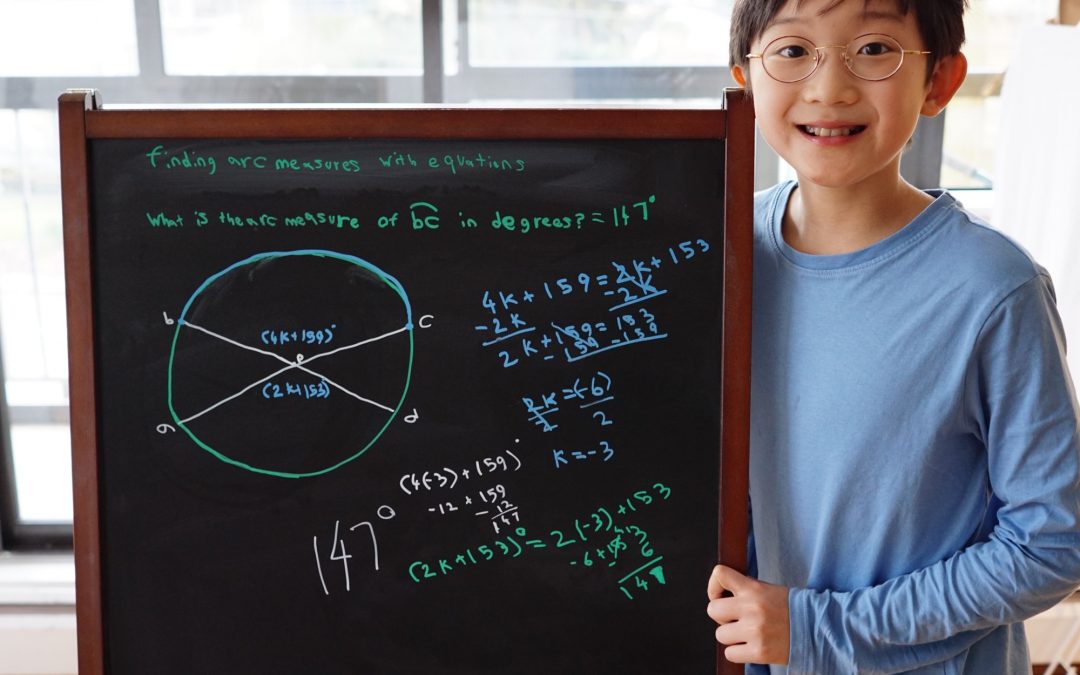
This week marks the start of the winter term and Ethan was back at it with a new schedule and tasks for the week. Here’s what he did.
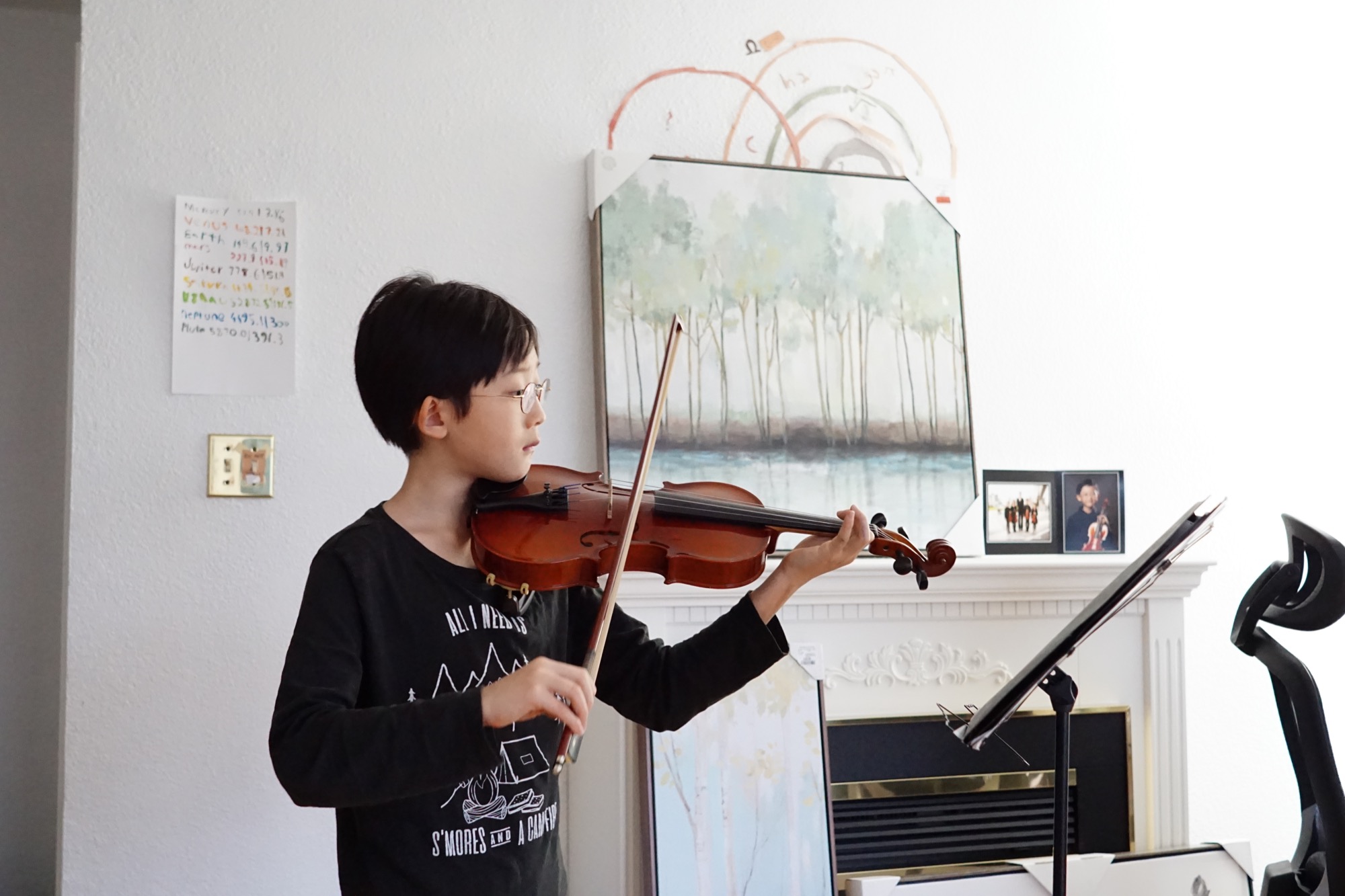
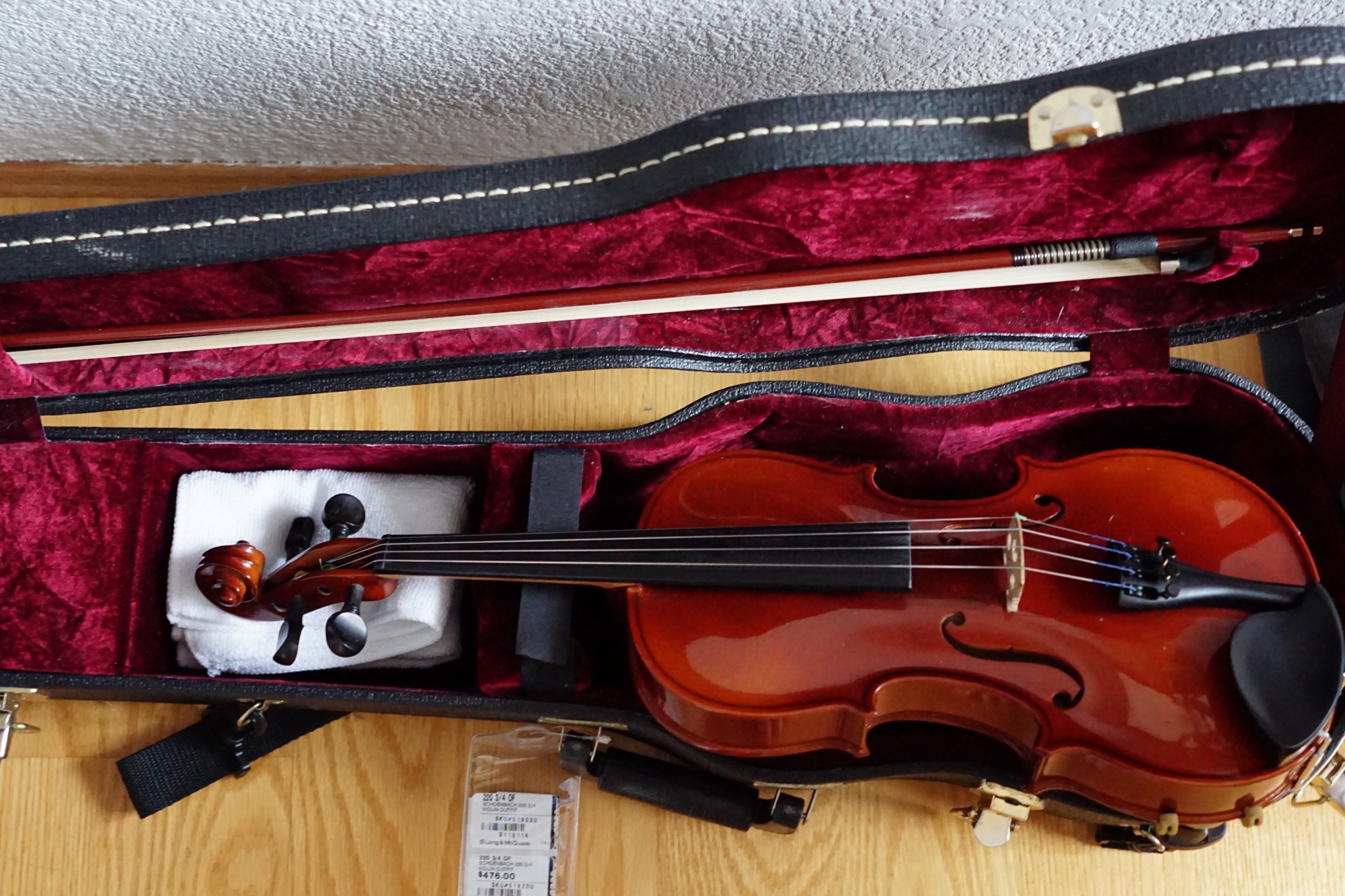
Ethan started his activities again this week. He has taekwondo, violin, swimming, skating and nature school as his main activities. He’ll be taking swimming lessons three times a week. We think it’s a good way for him to be more active and it gives him more practice time. Nature school starts next week.
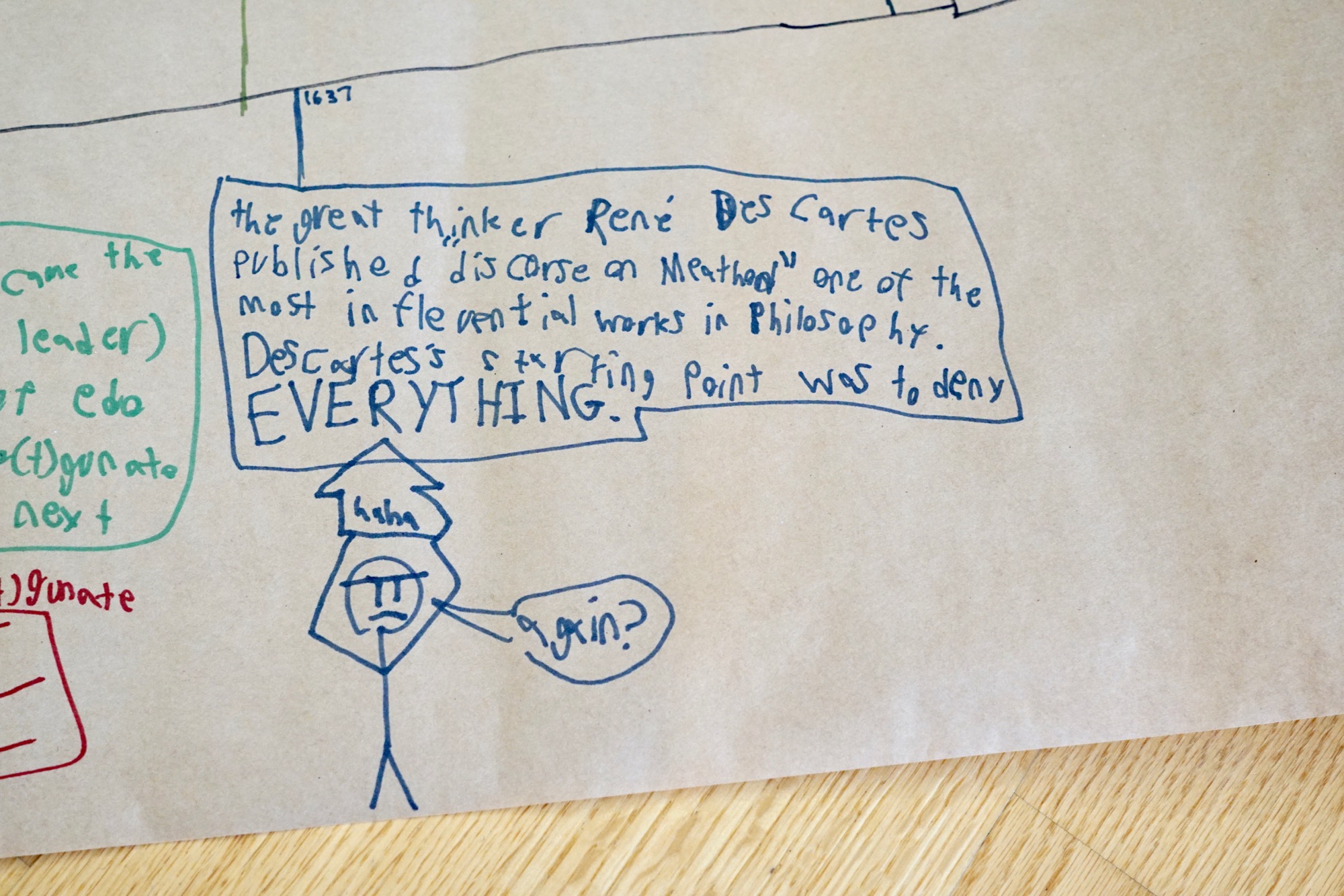
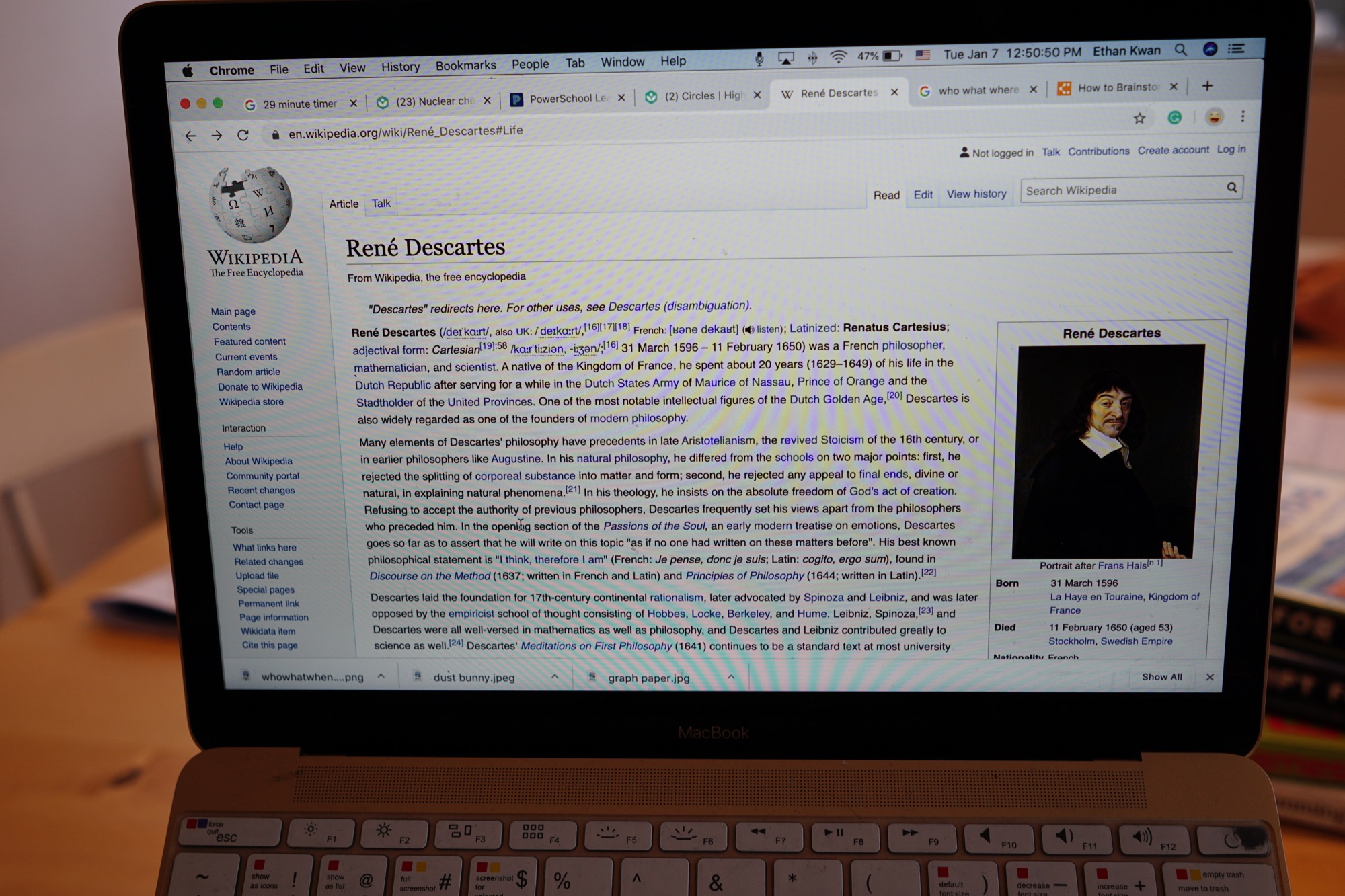
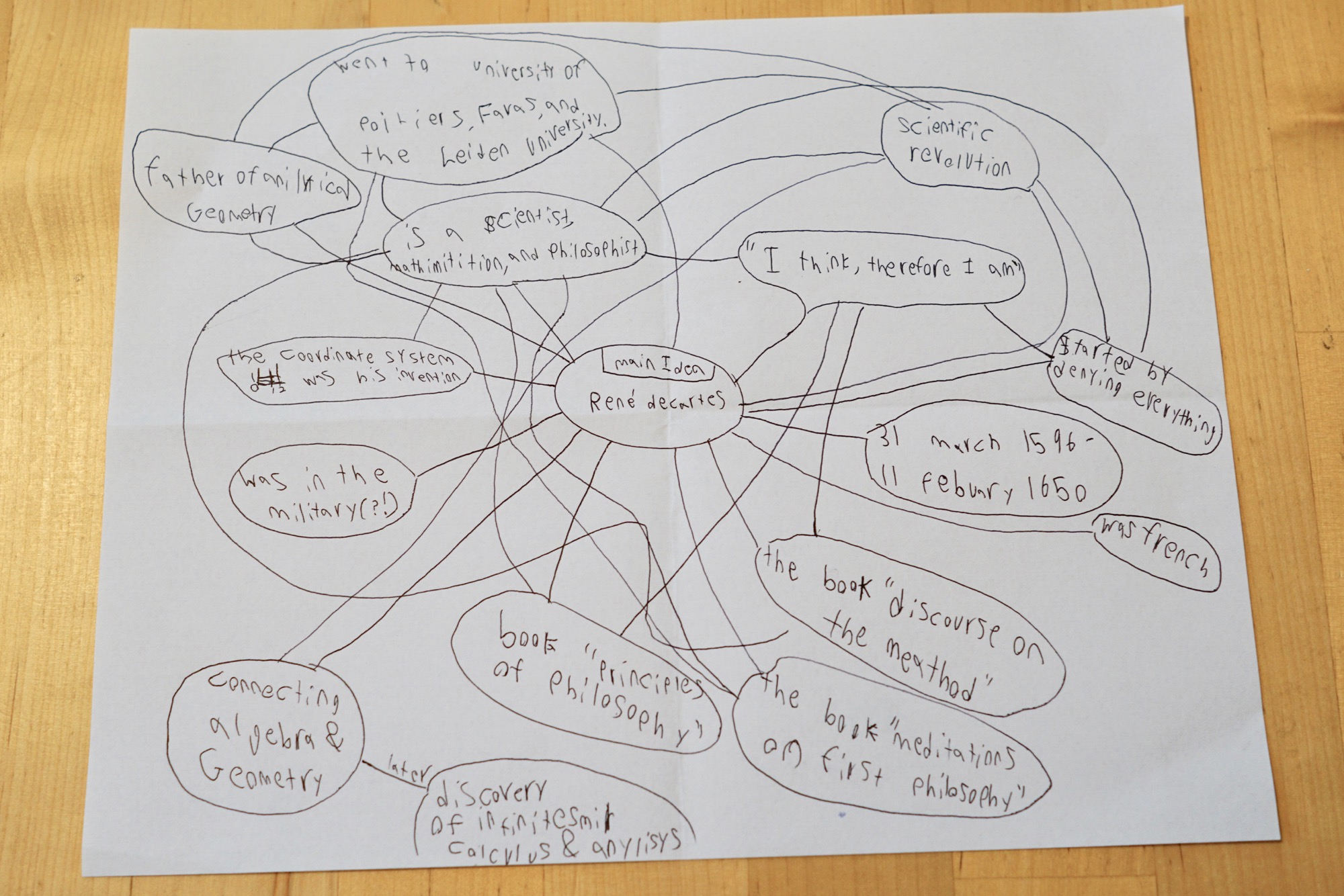
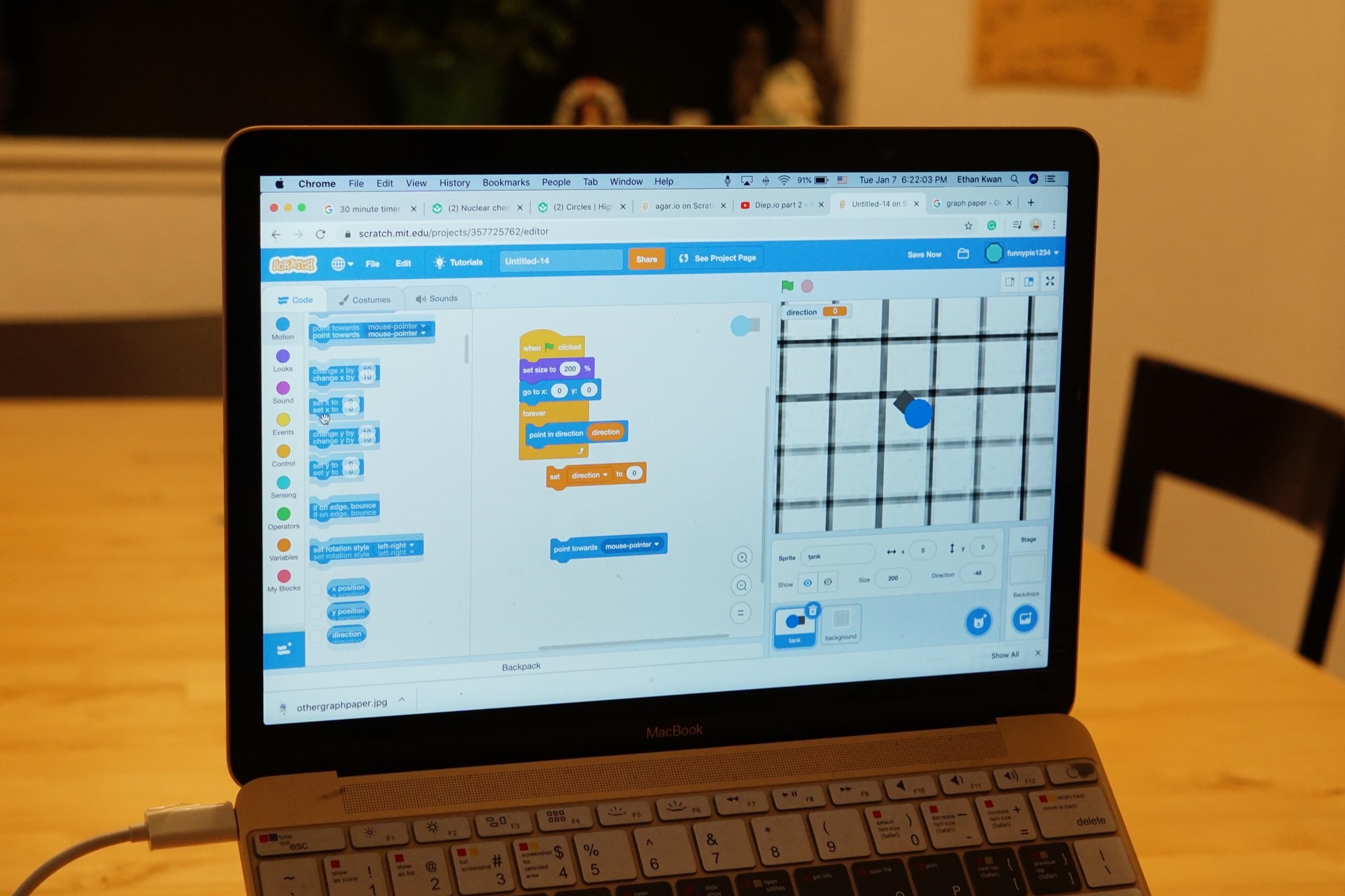
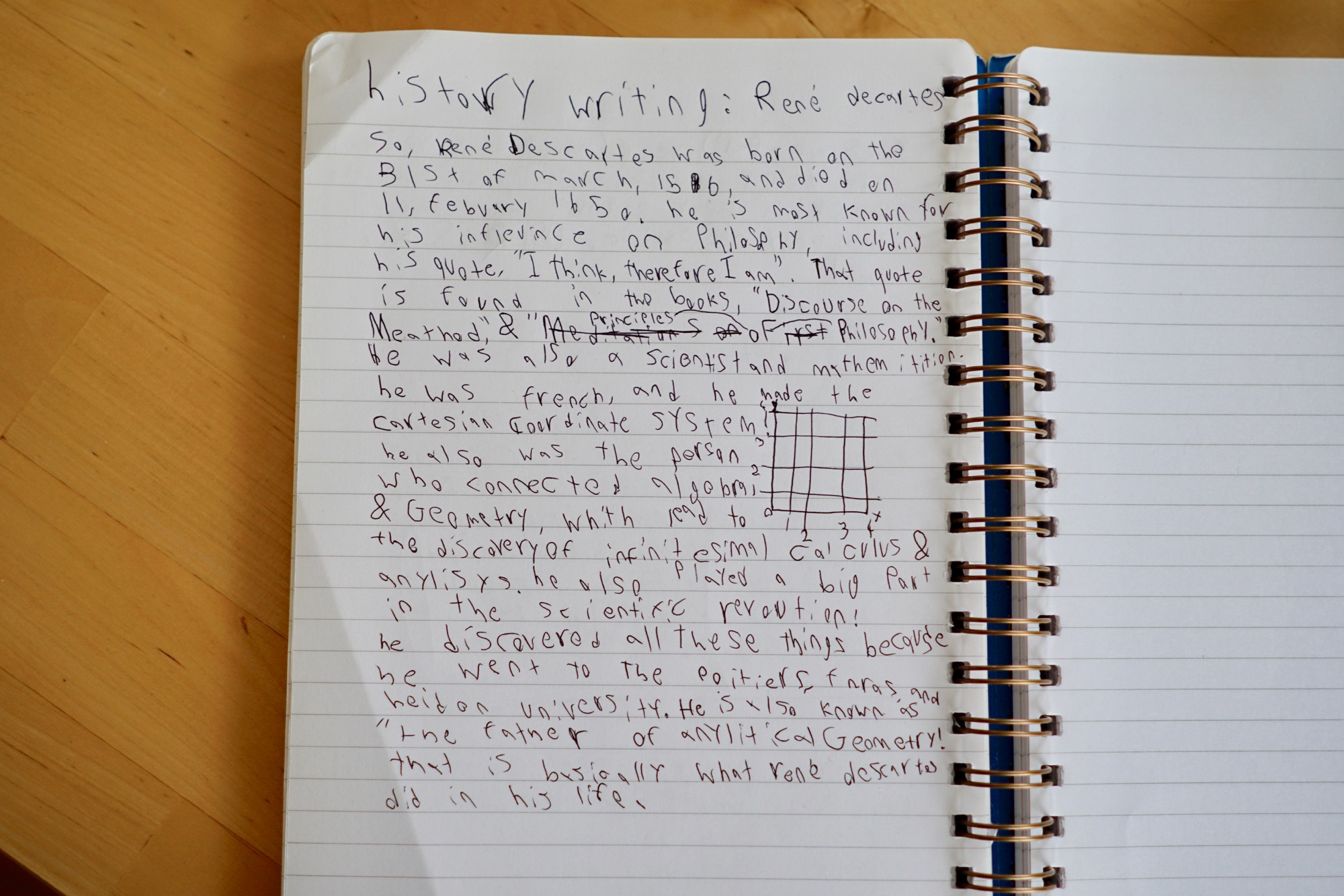
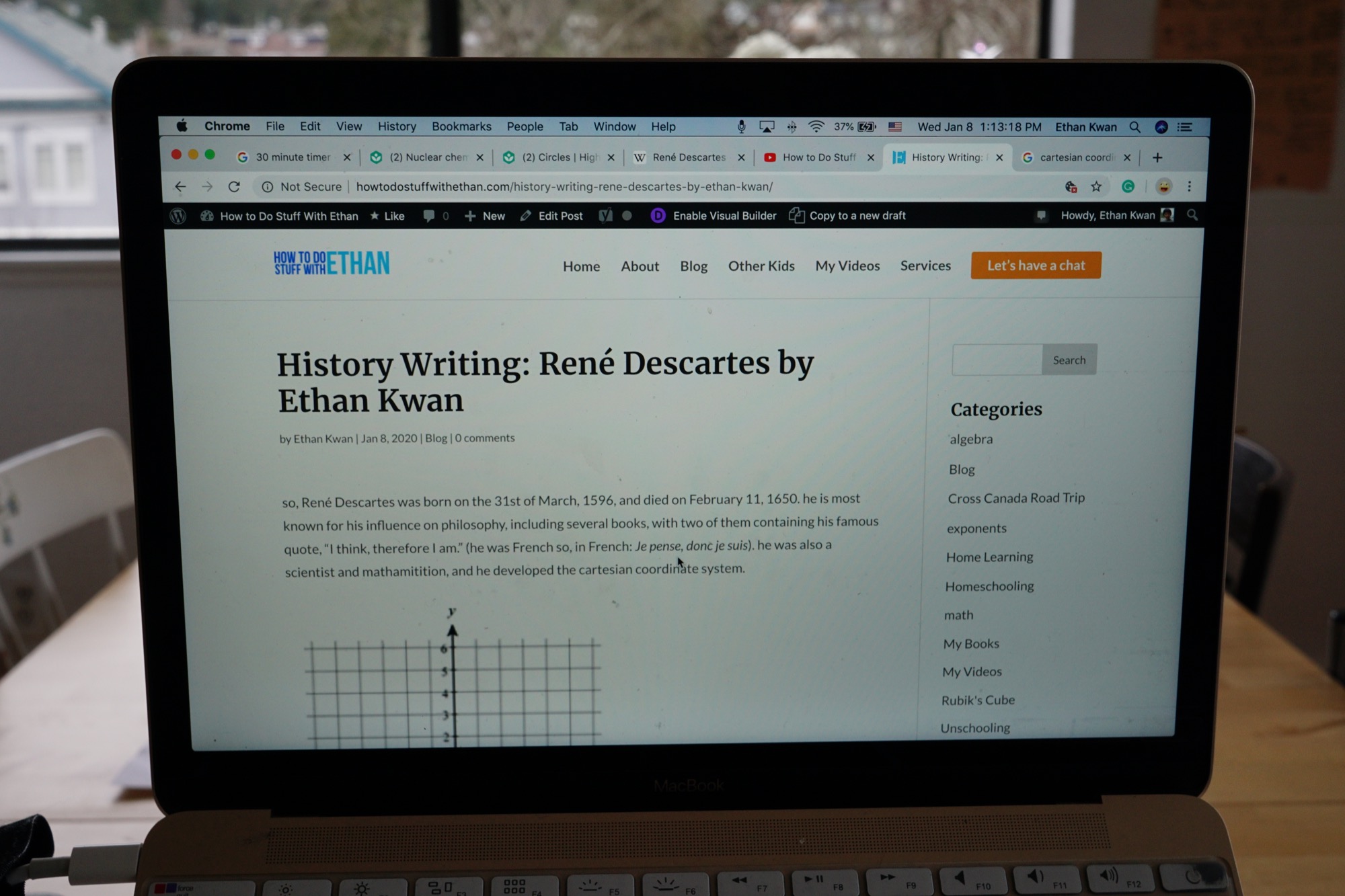
While researching for his history timeline, he learned about René Descartes. Ethan was interested in Descartes because he was also a scientist and mathematician. Ethan really liked that Descartes developed the Cartesian coordinate system because of how much Ethan likes making graphs.
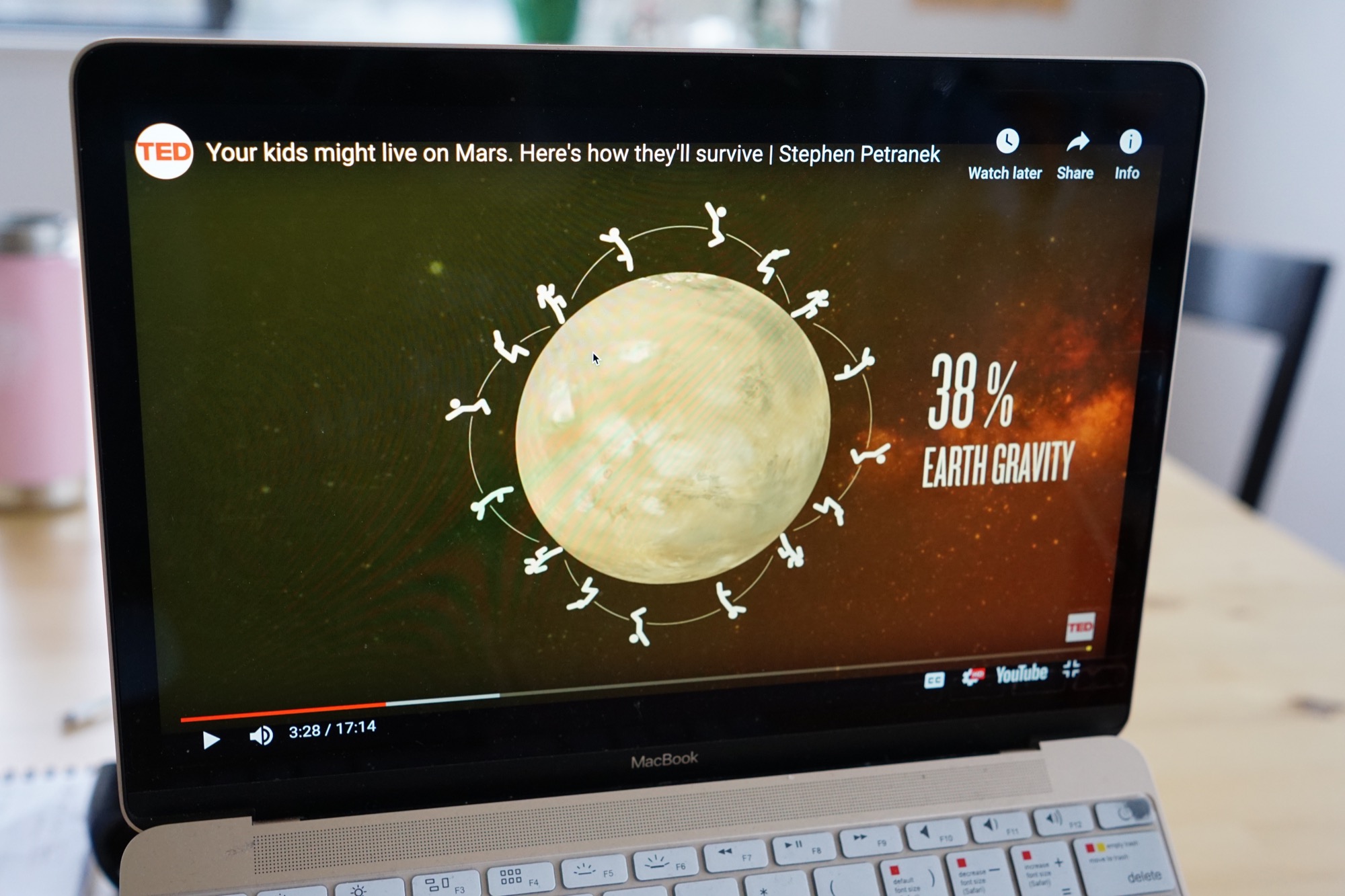
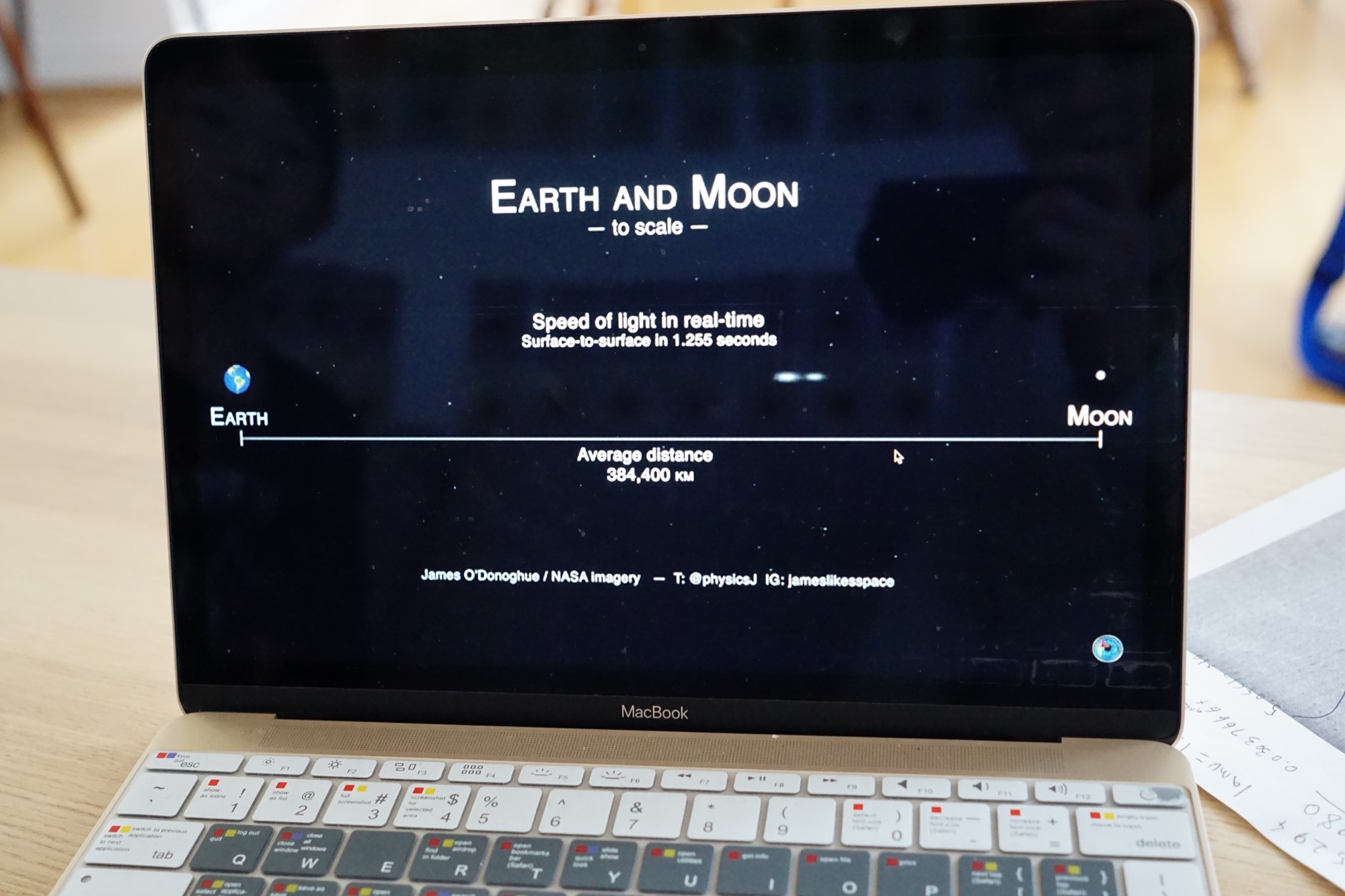
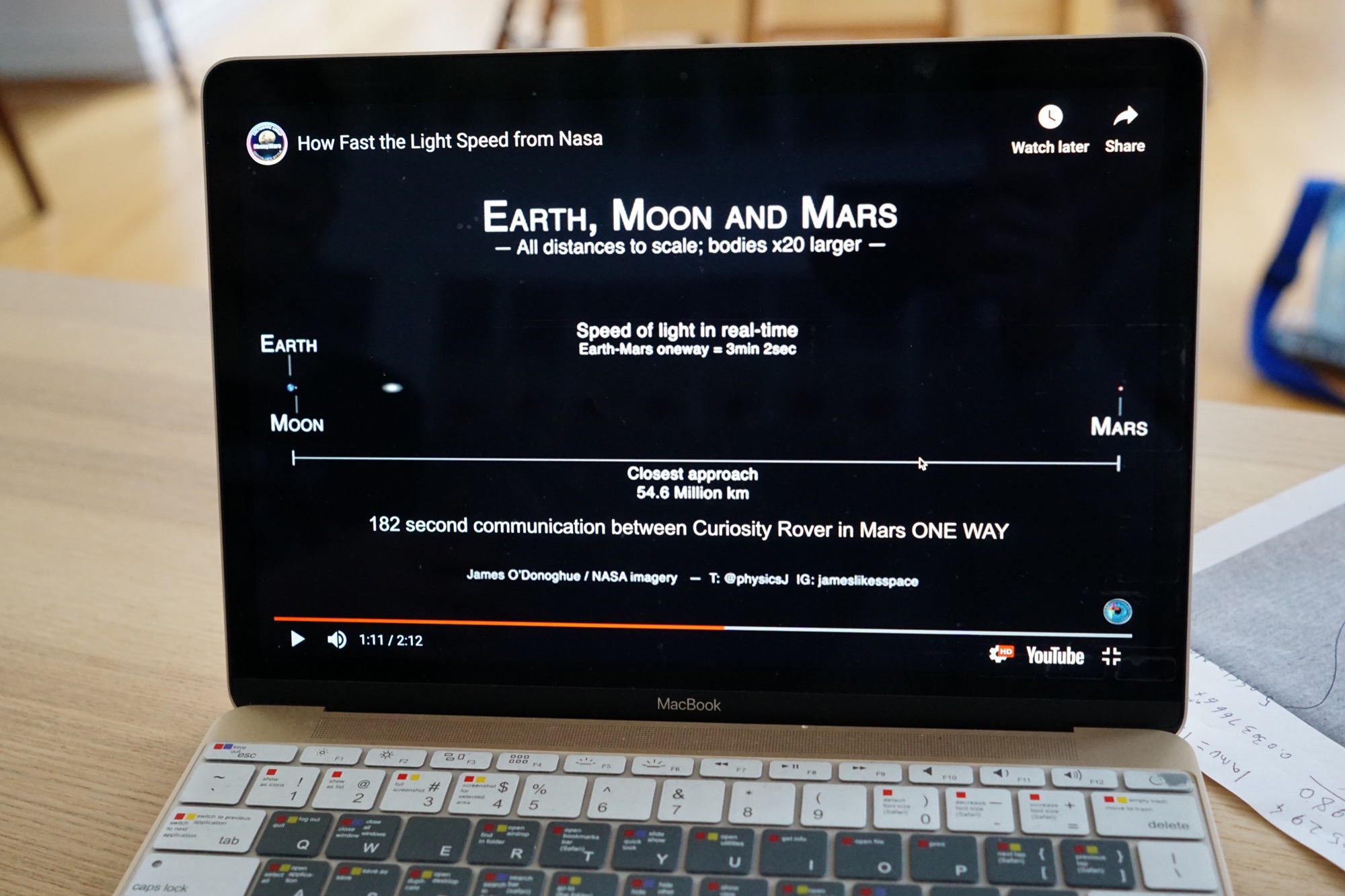
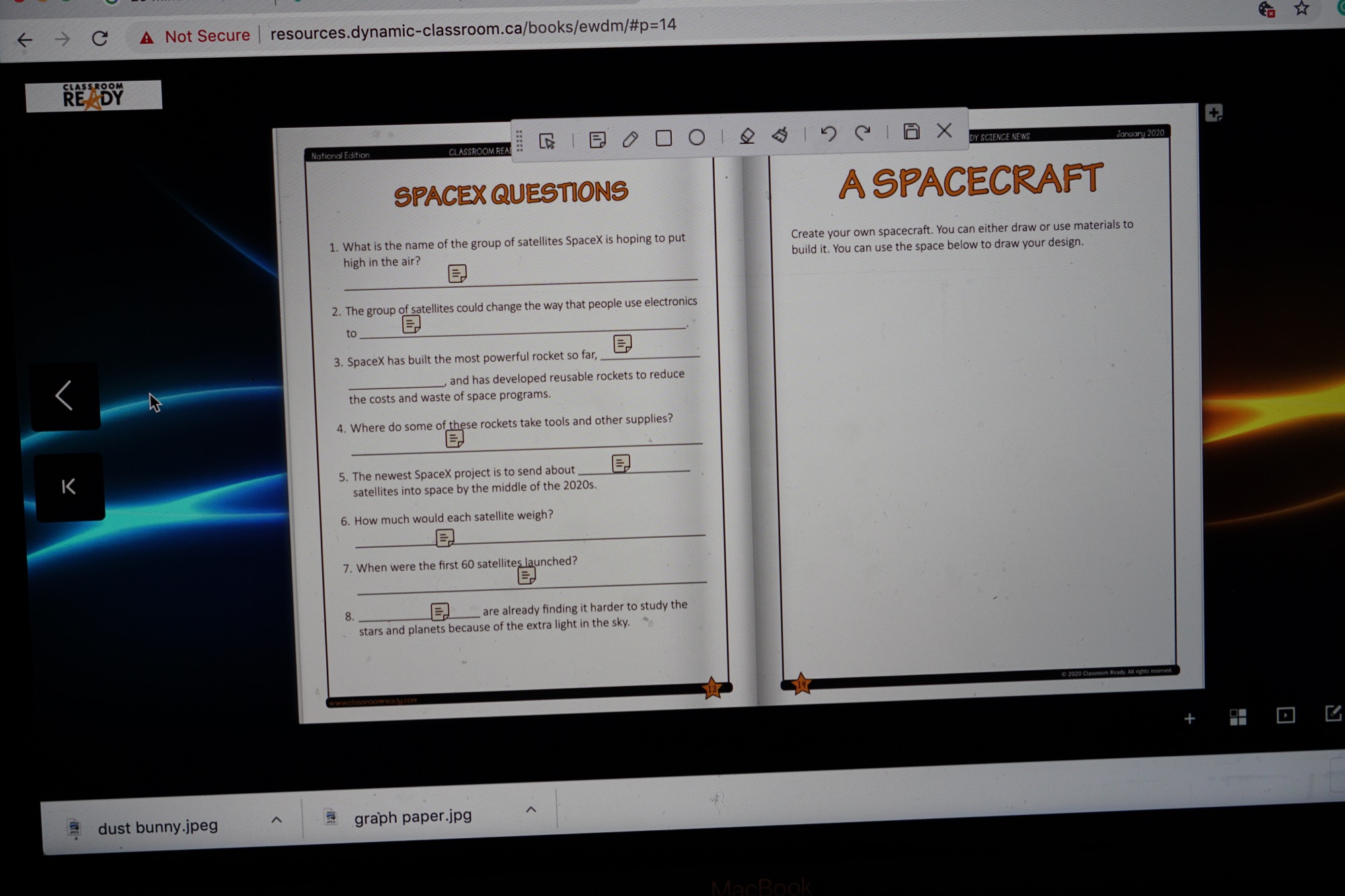
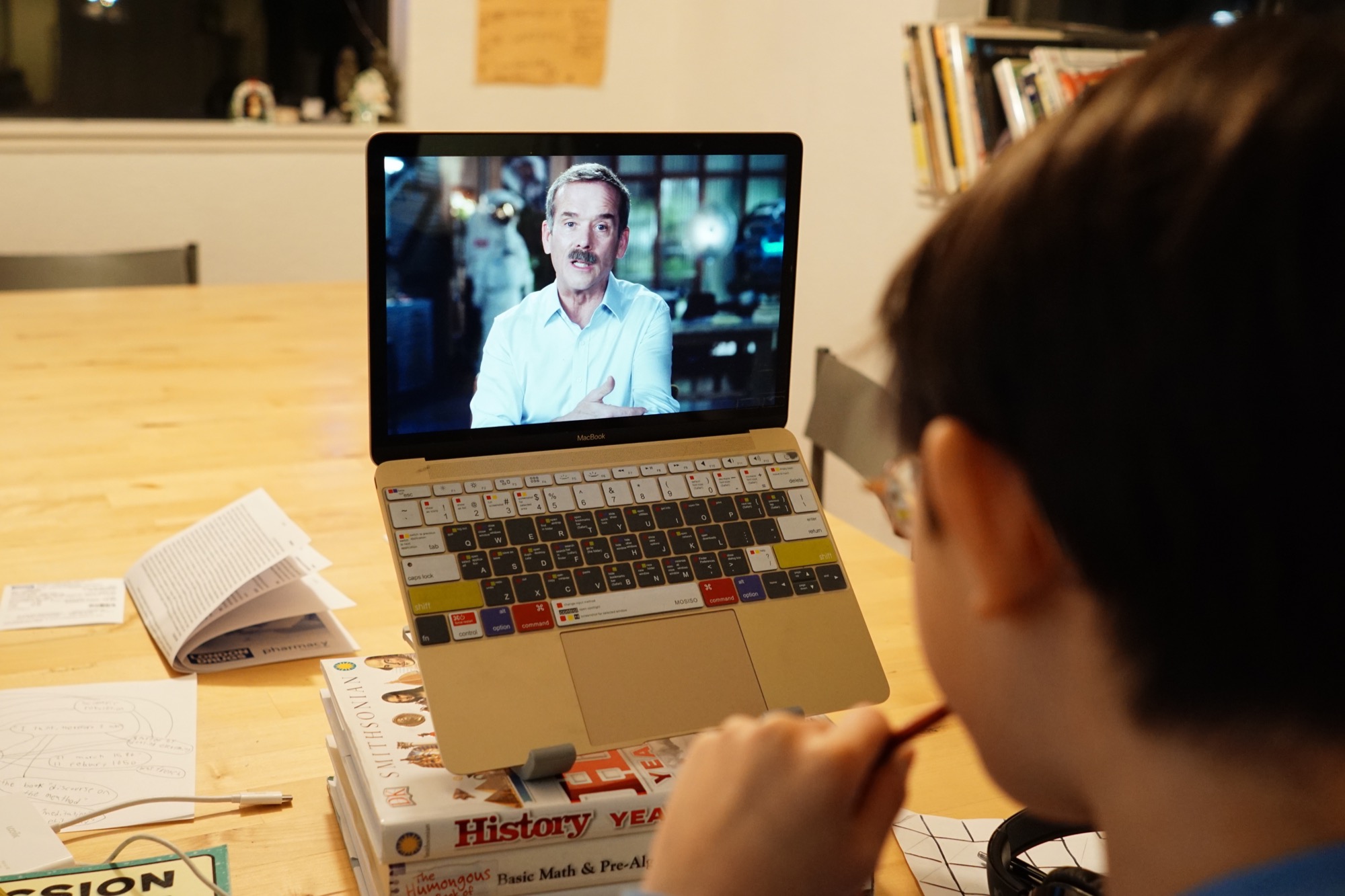
Ethan has access to Masterclass and was interested in Chris Hadfield’s class about being an astronaut. After watching, Ethan went to the Canadian Space Agency site and watched a video about what he had to do to become an astronaut. after that, he played a game on the CSA website where you launch rockets to other planets.
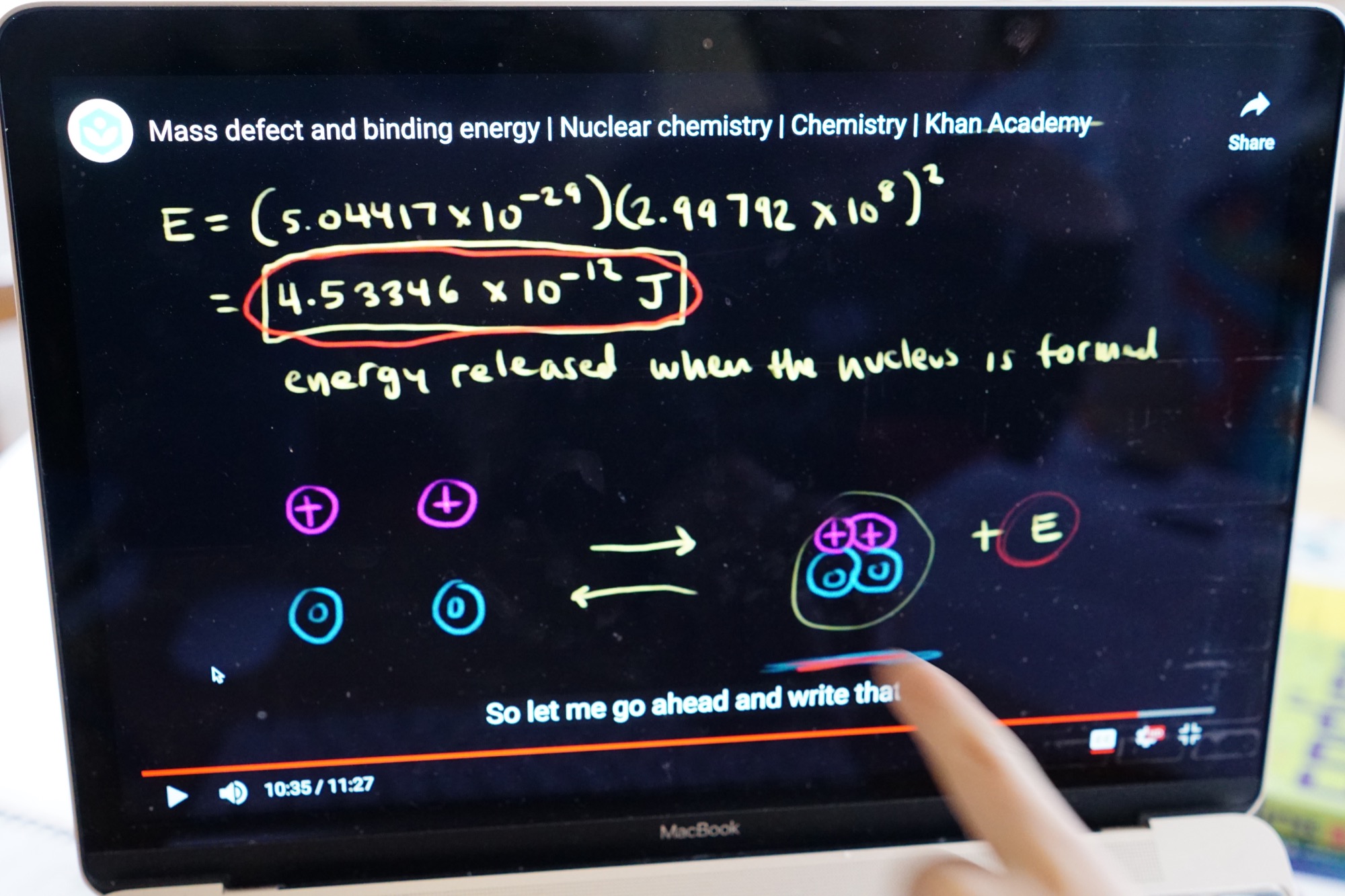
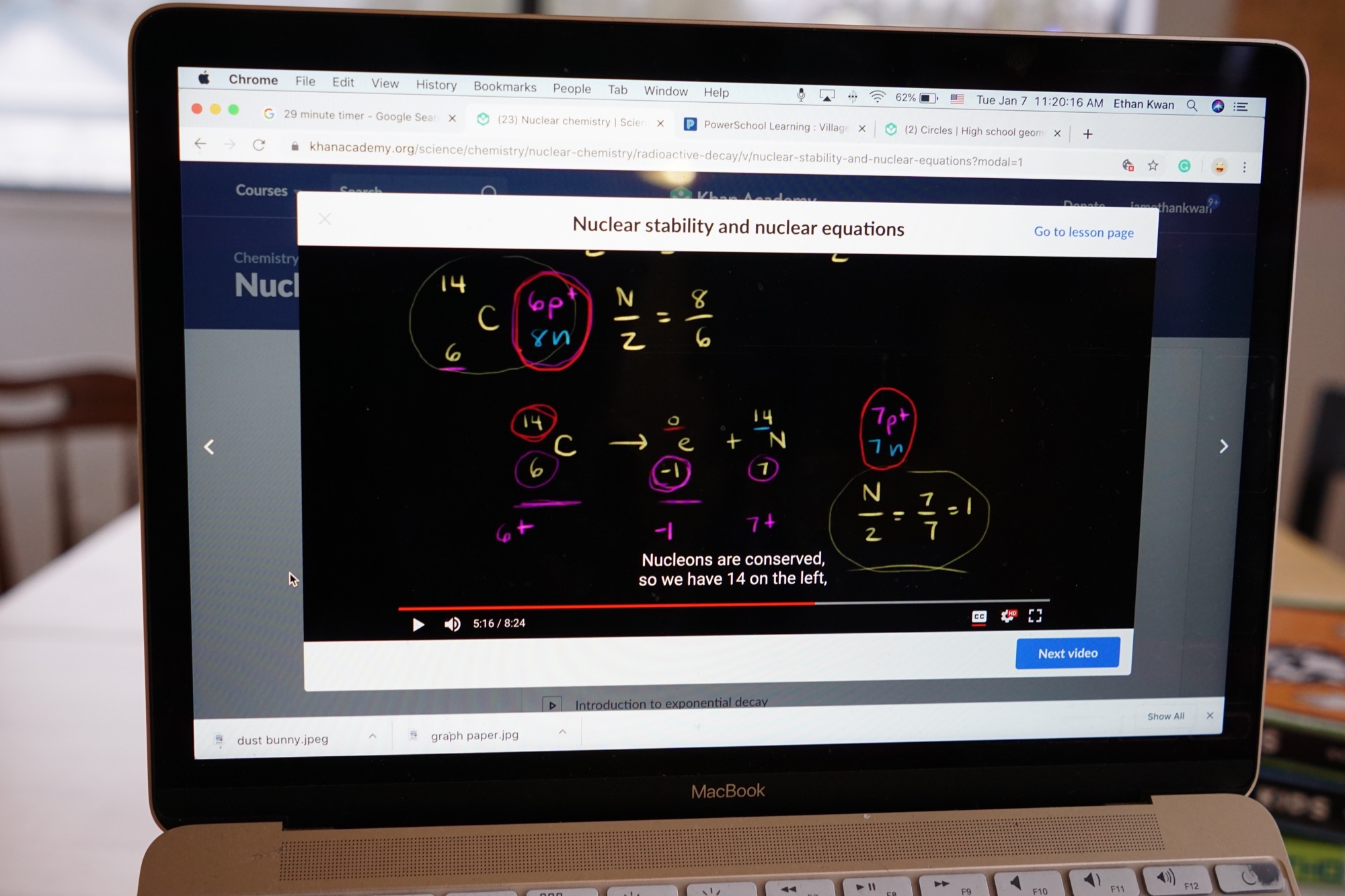
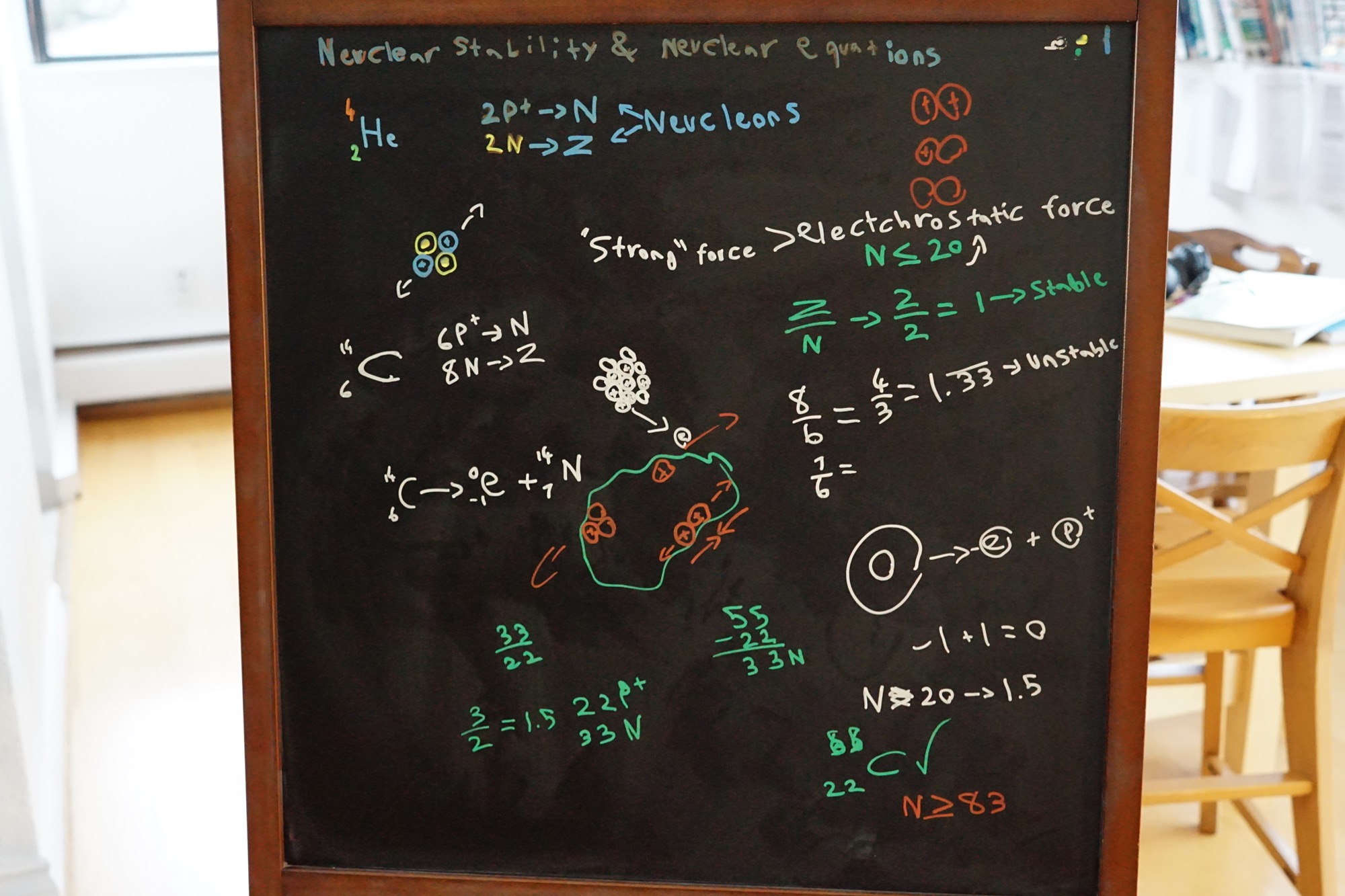
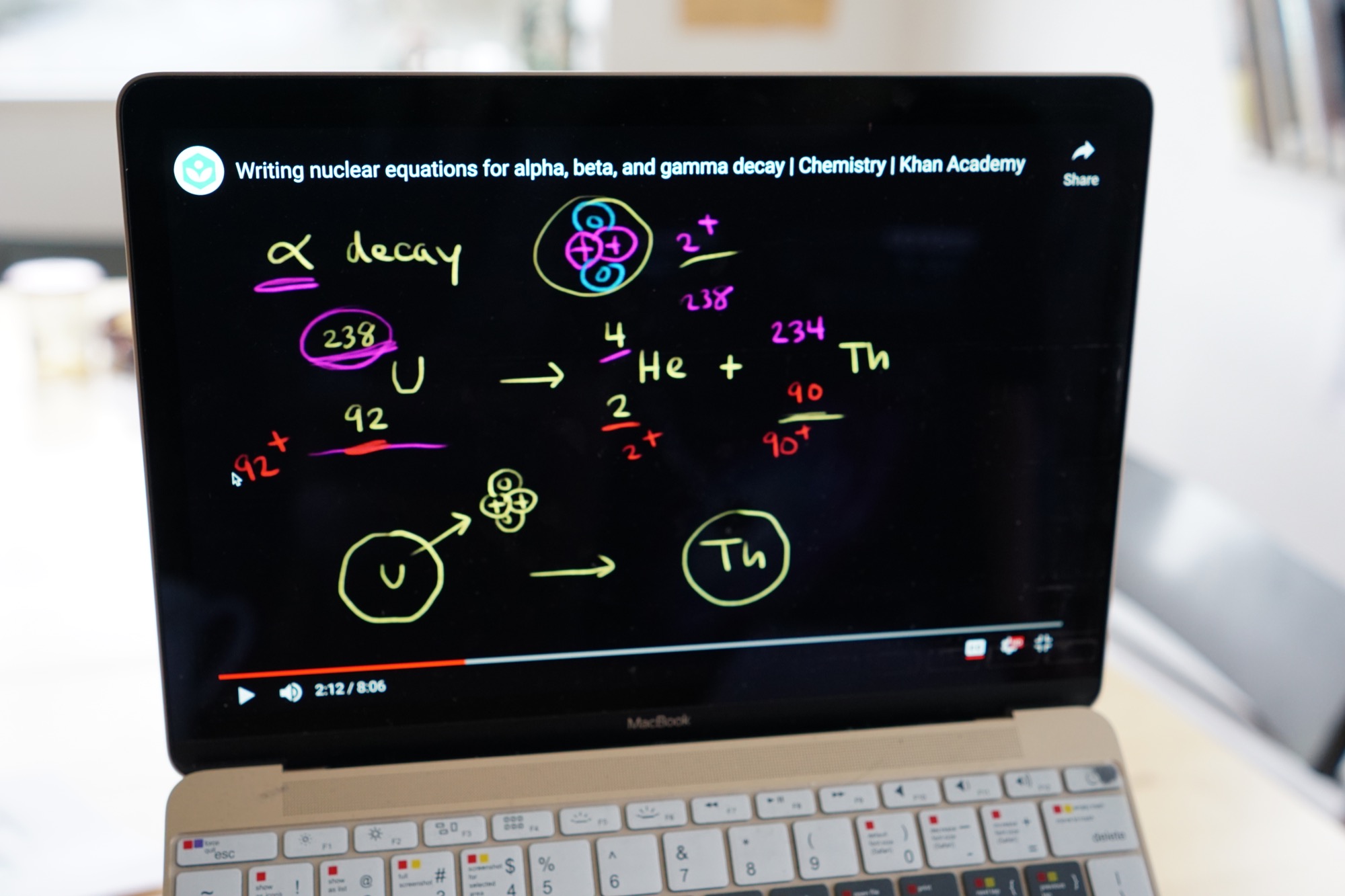
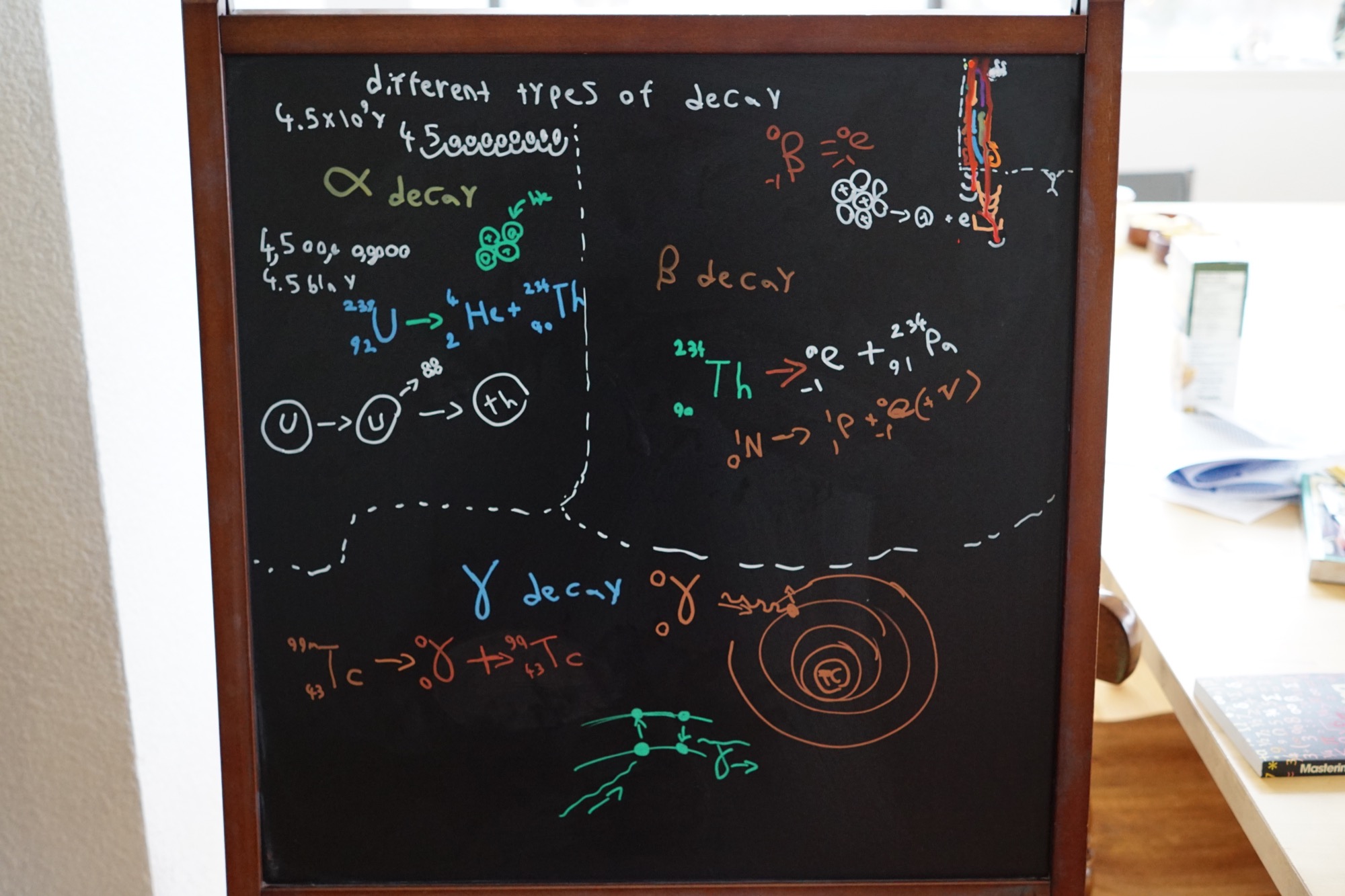
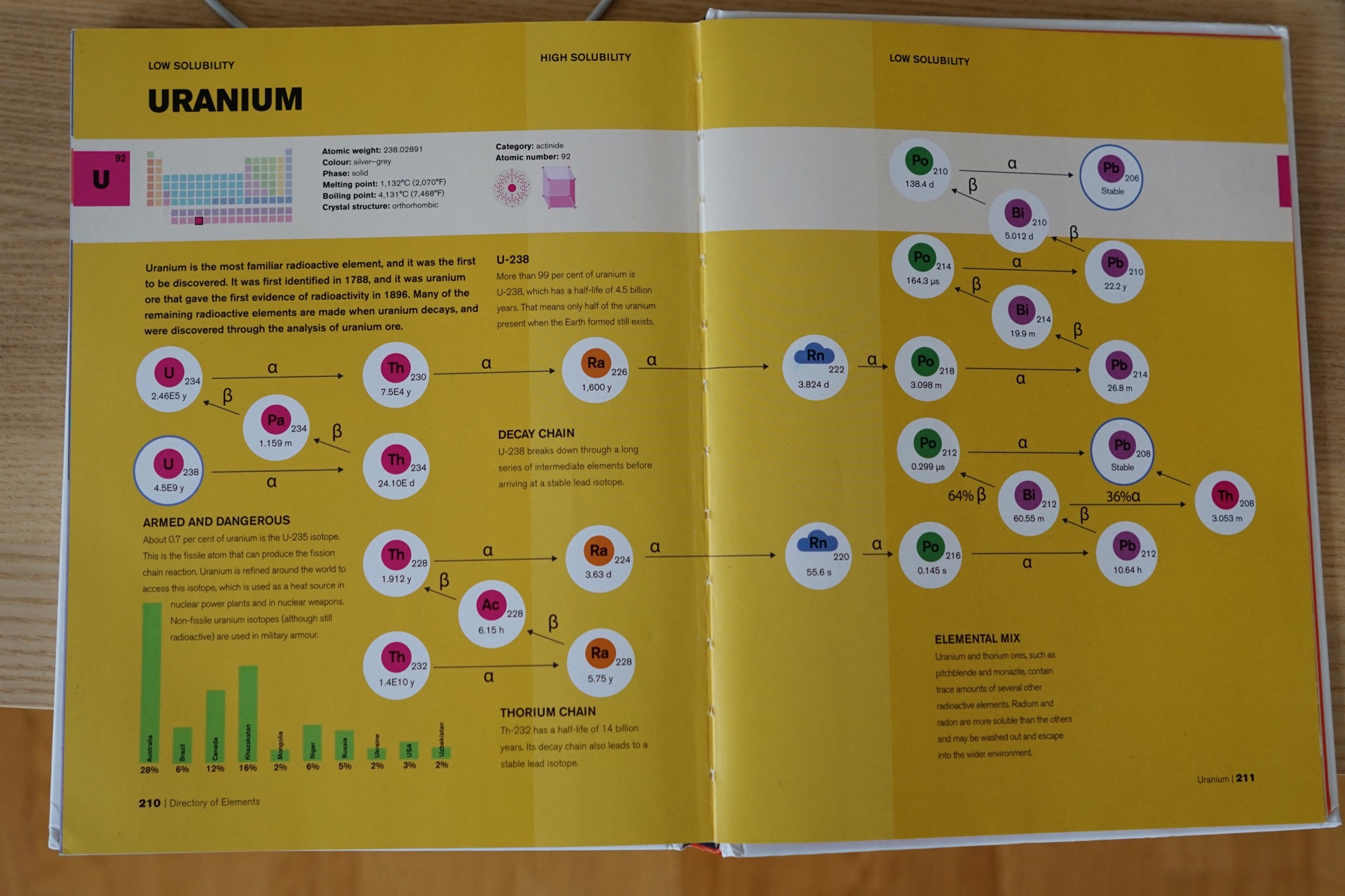
He started learning about nuclear decay and nuclear equations. This brought him back to becoming interested in chemistry. He was also quite enthusiastic when teaching what he learned.
Thanks to Natasha, Ethan’s LC, for sending all the new materials and links. Ethan spent two days looking at all the things she sent and found everything useful and interesting.
January 5
January 6
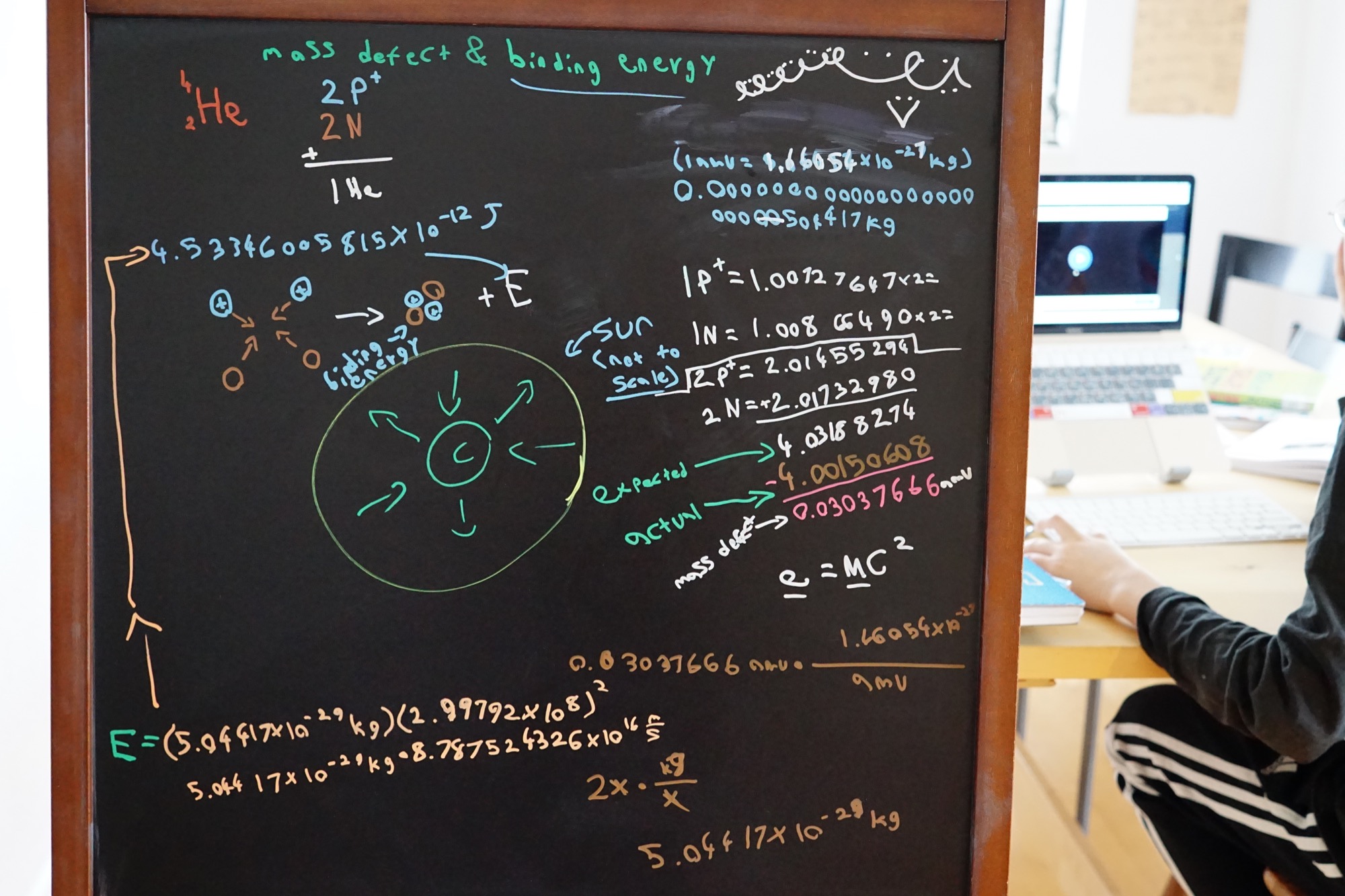
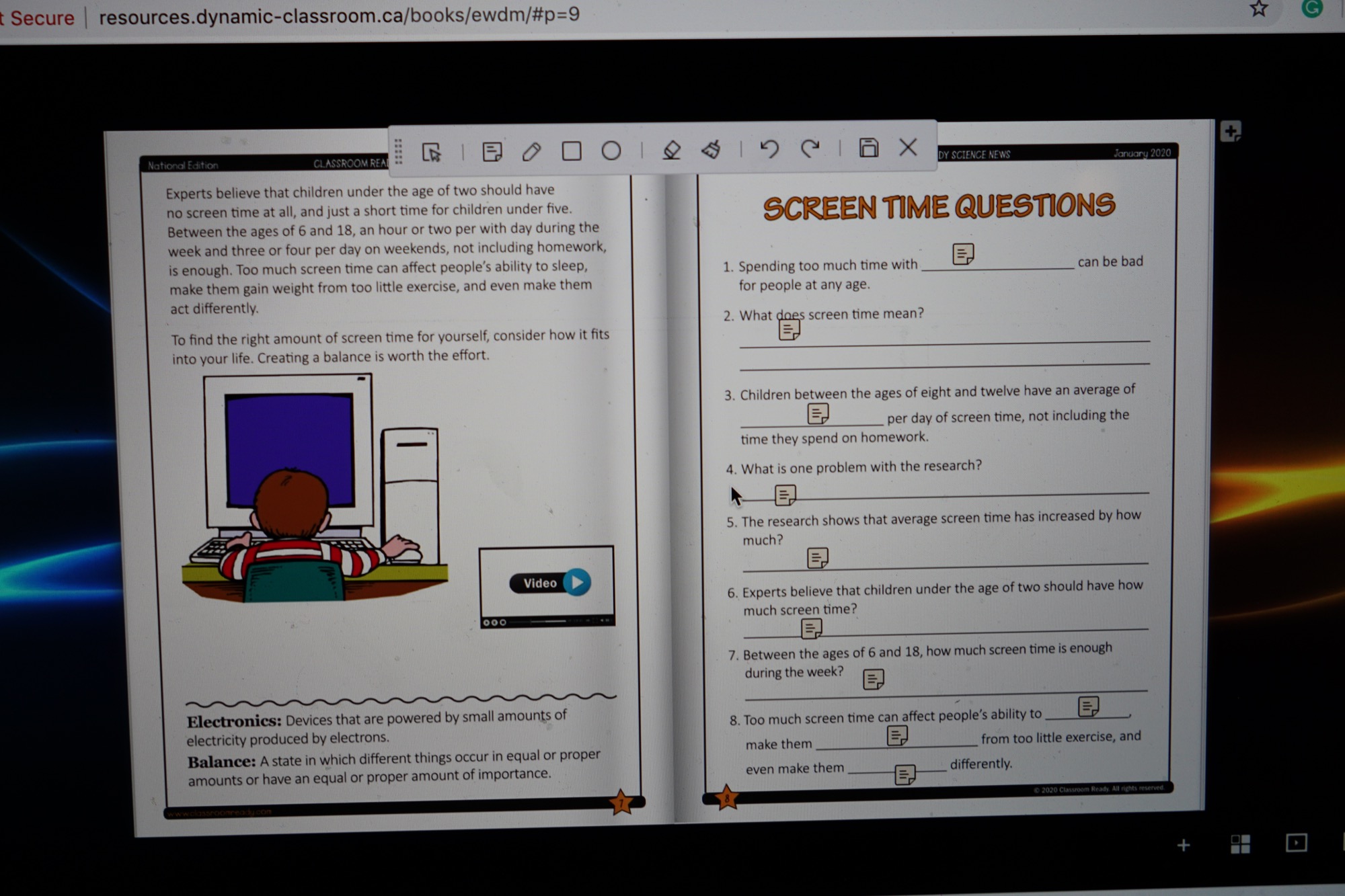
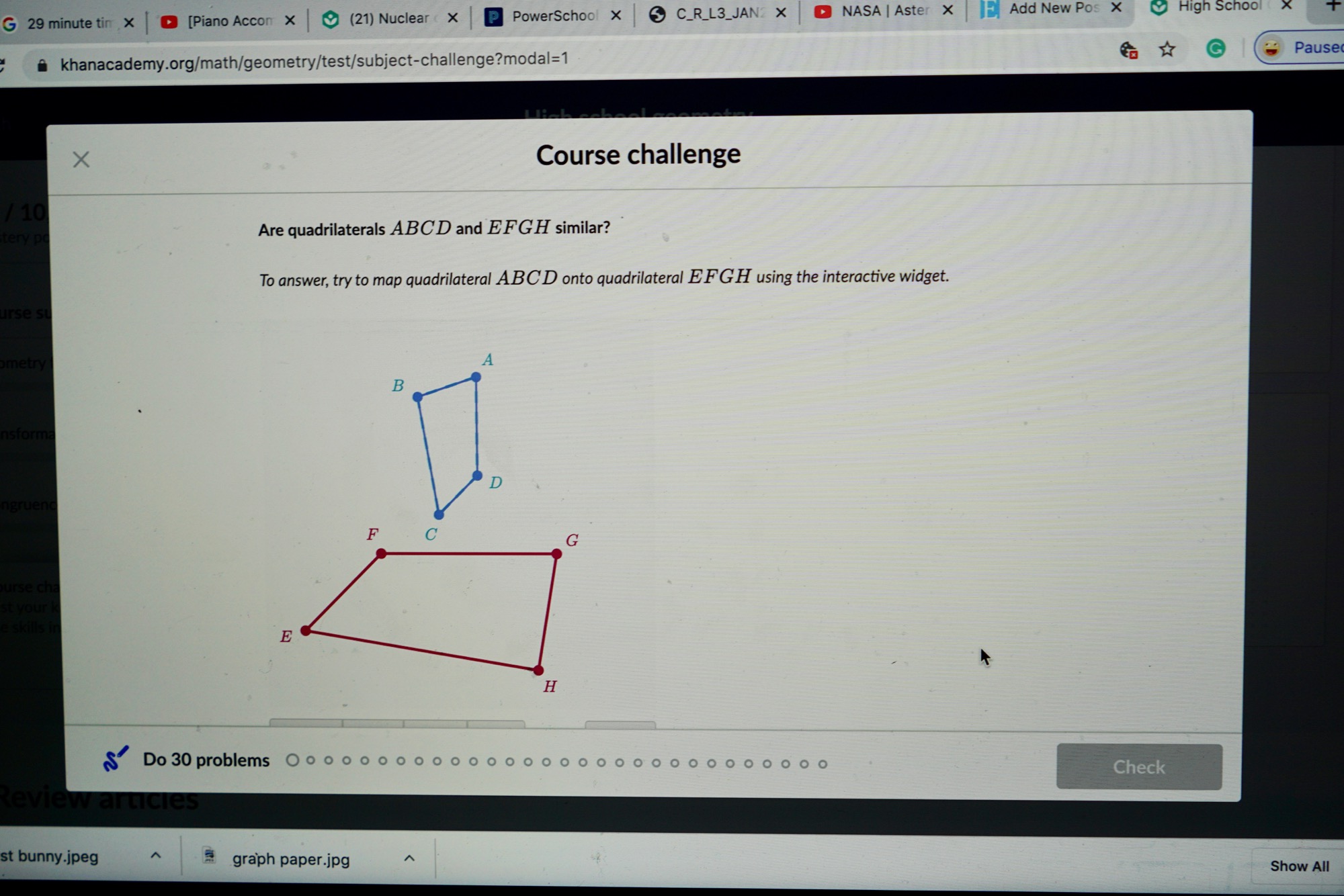
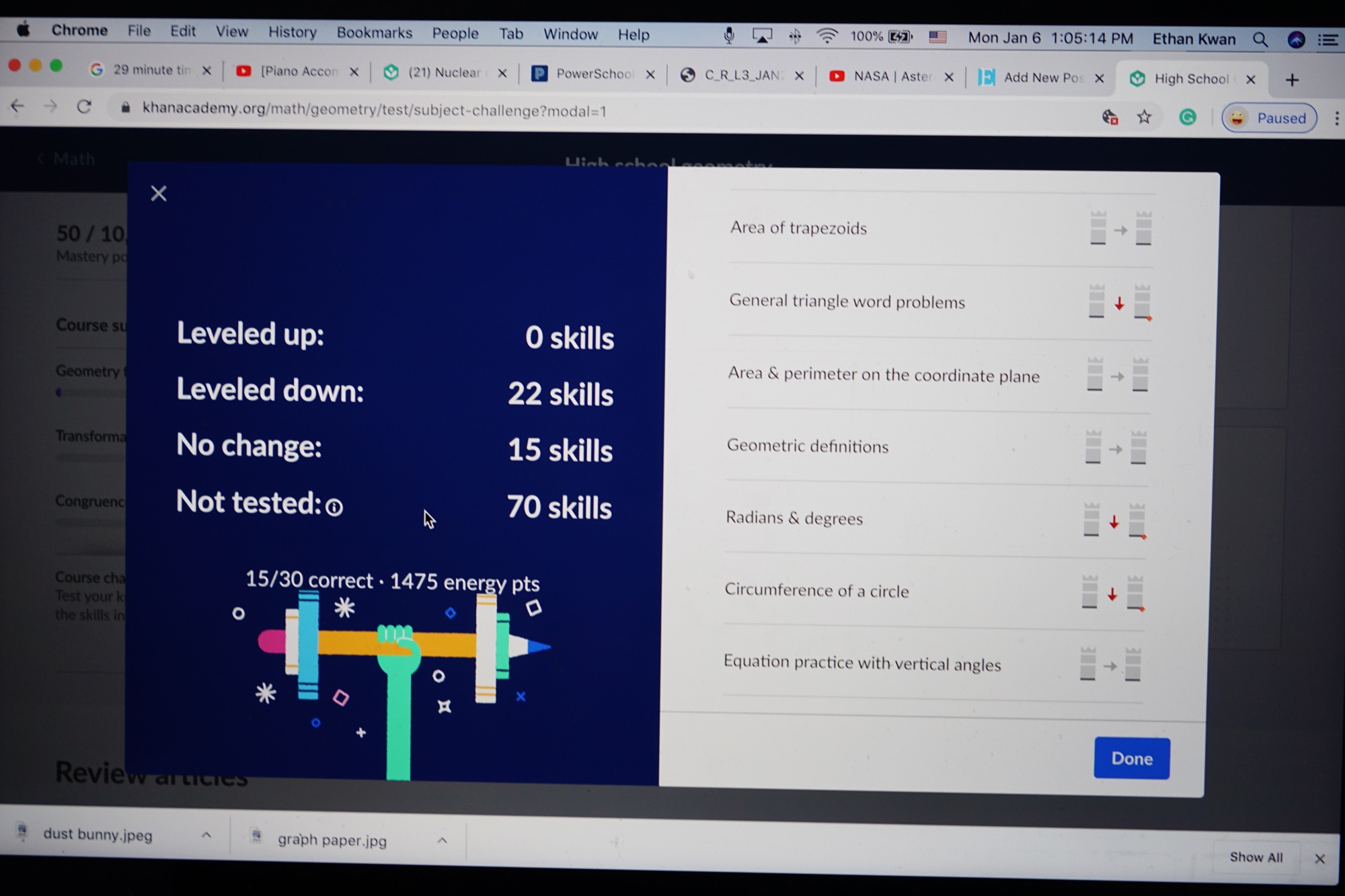
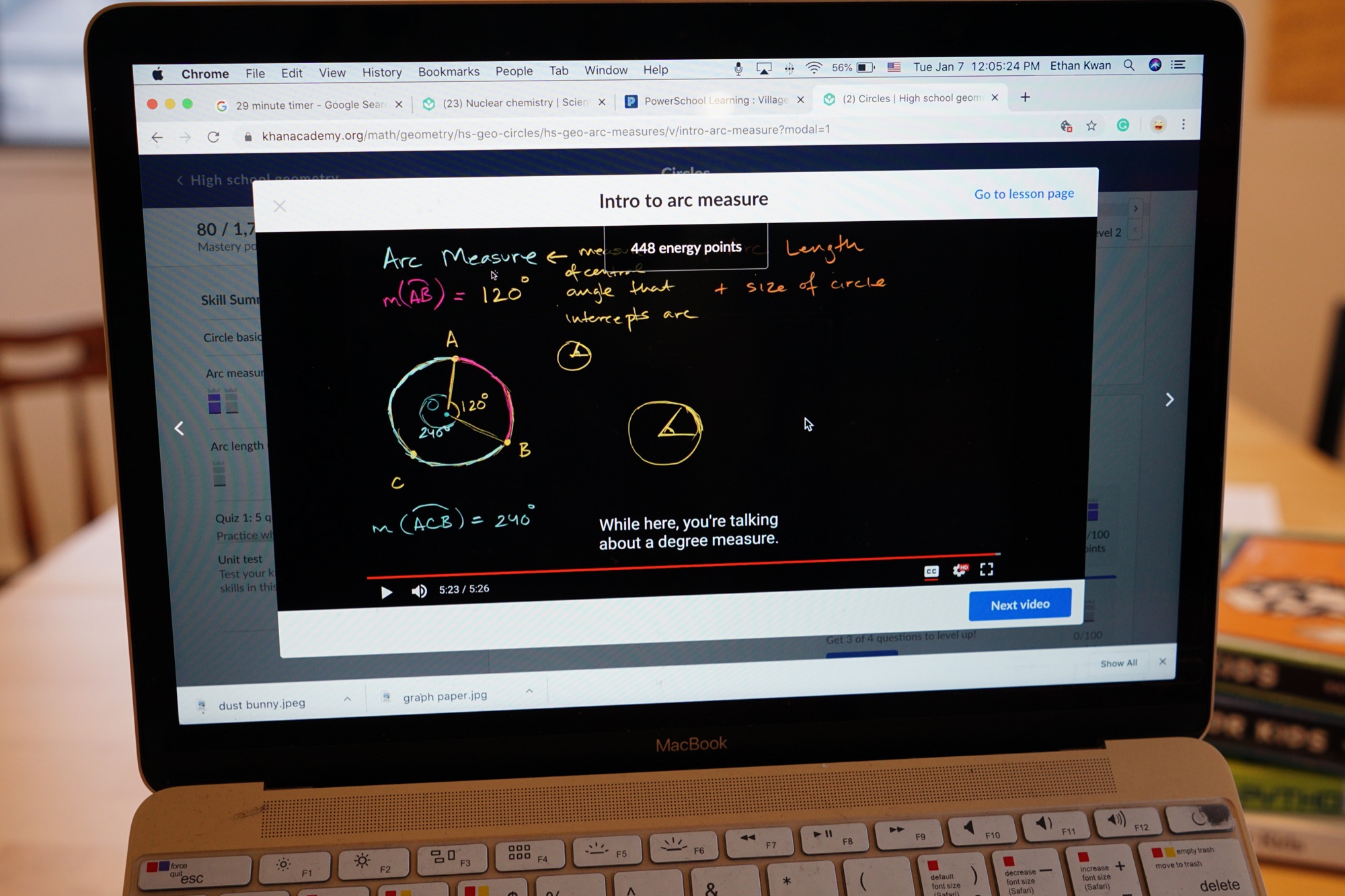
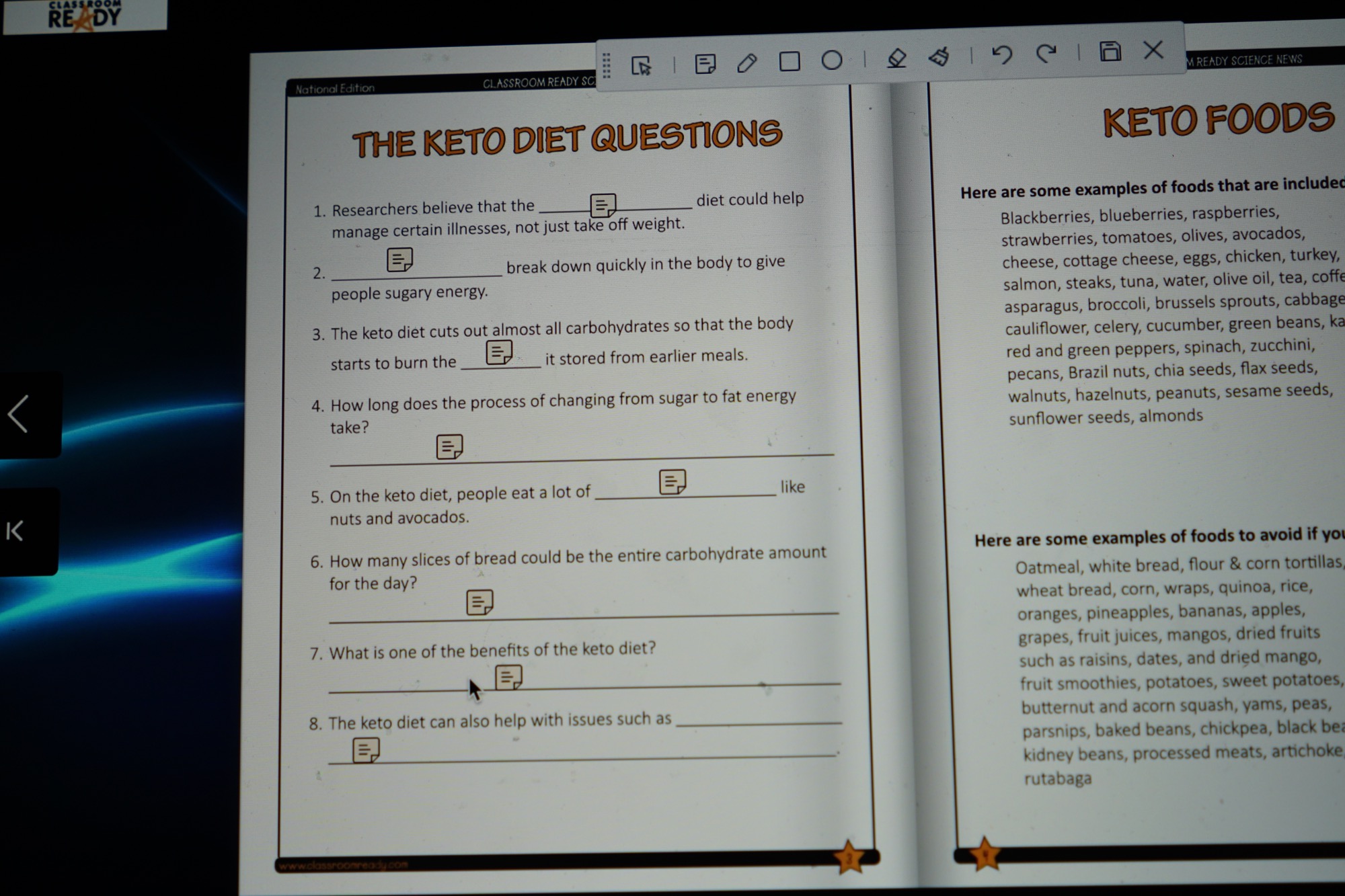
Dong Eun: I told Ethan that answering these questions requires more practice beforehand. He was actually a bit frustrated at his result. He tried the quiz a few times but he did them quickly. I explained that he should take his time and practice more because sometimes the questions on quizzes are made to be a little tricky.
January 7

January 8

January 9
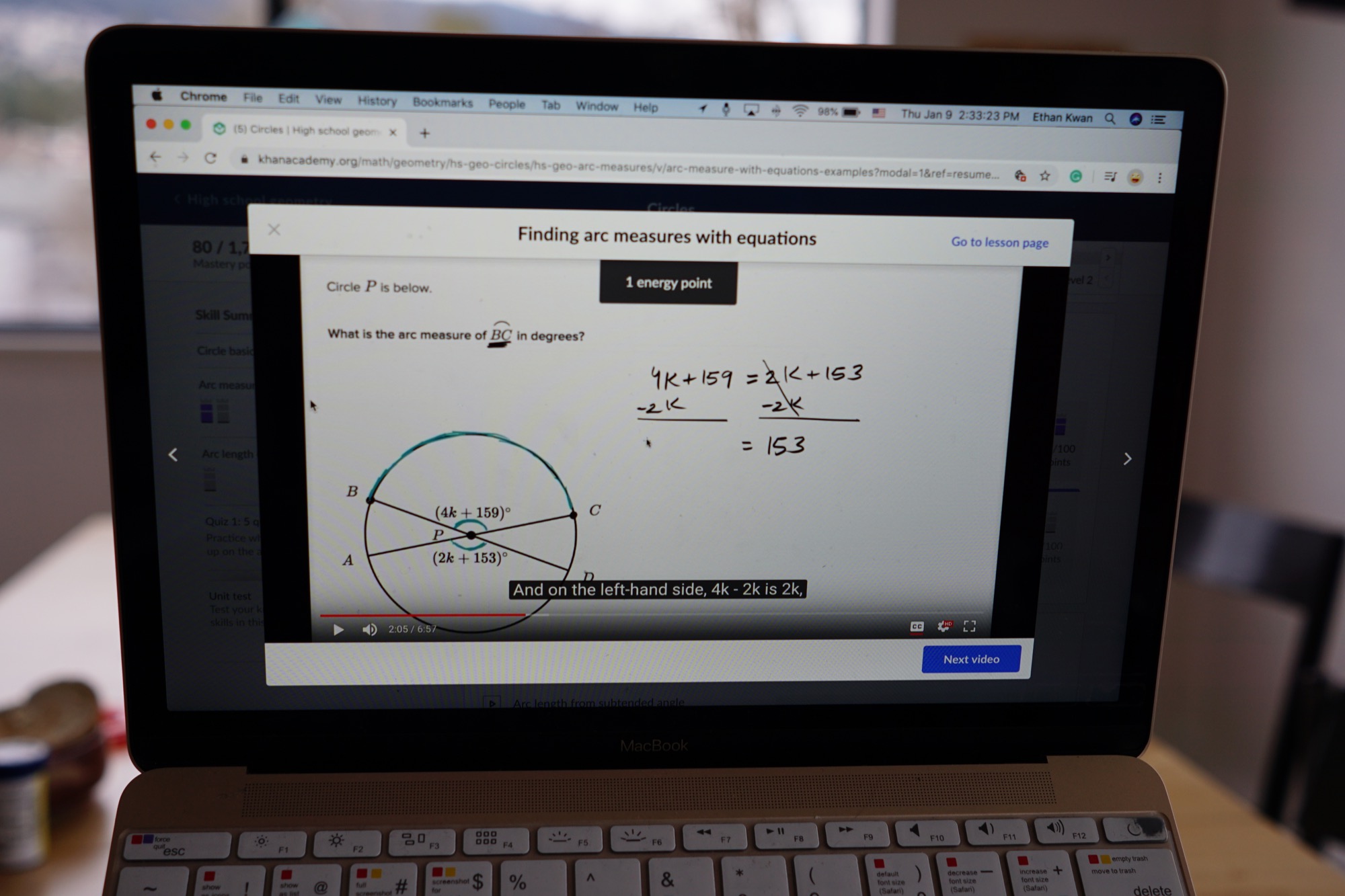
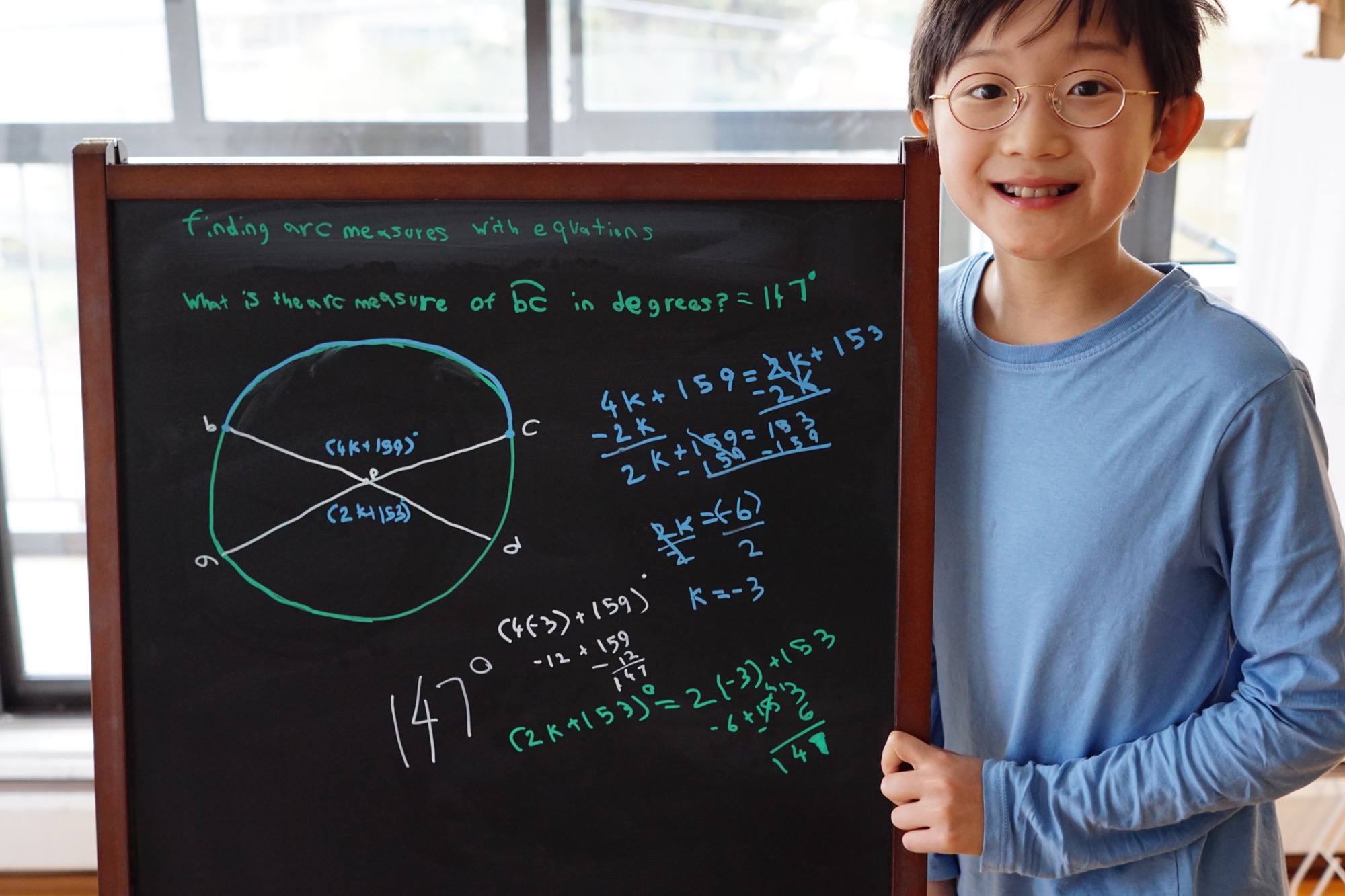
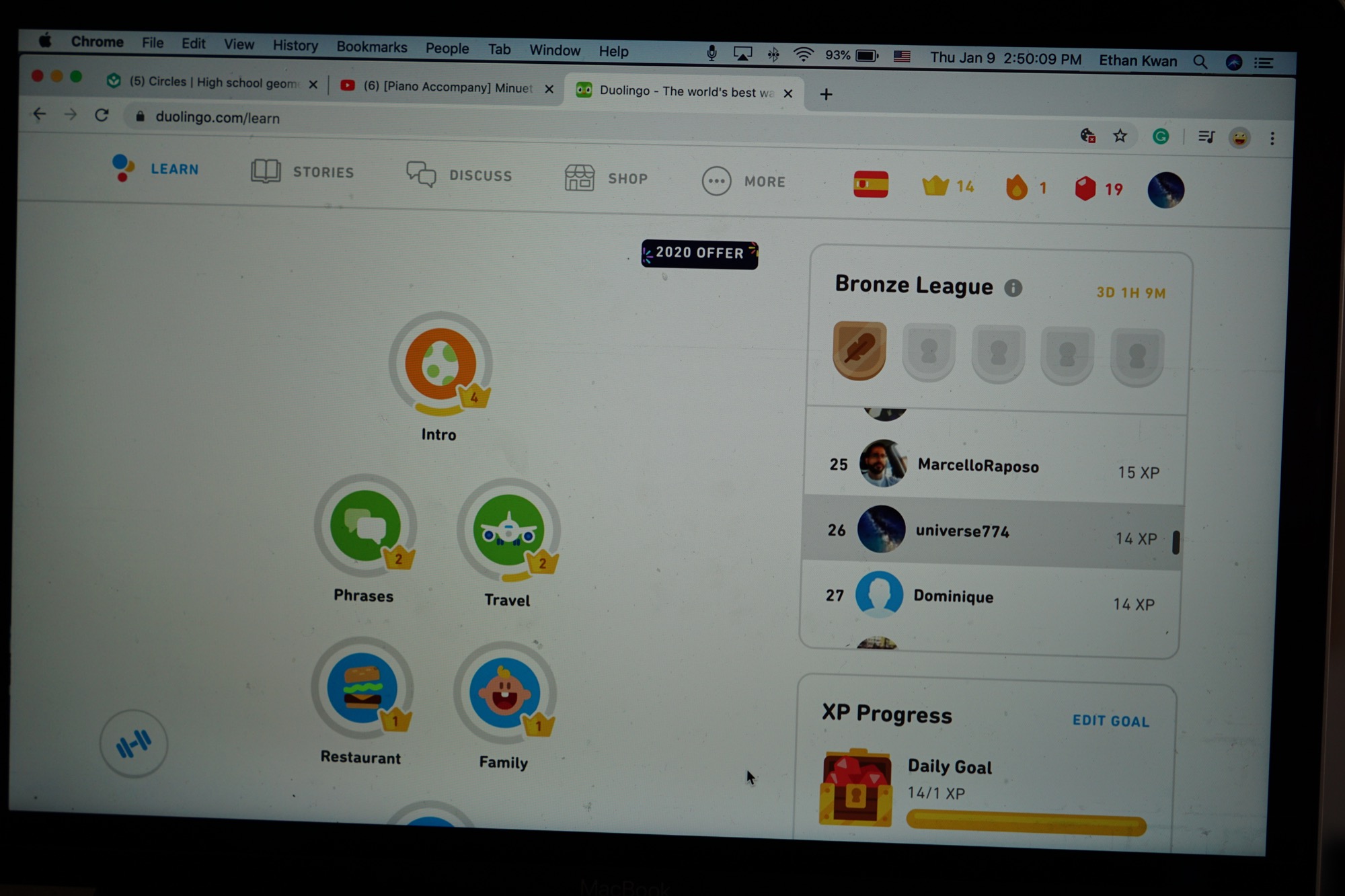
January 10
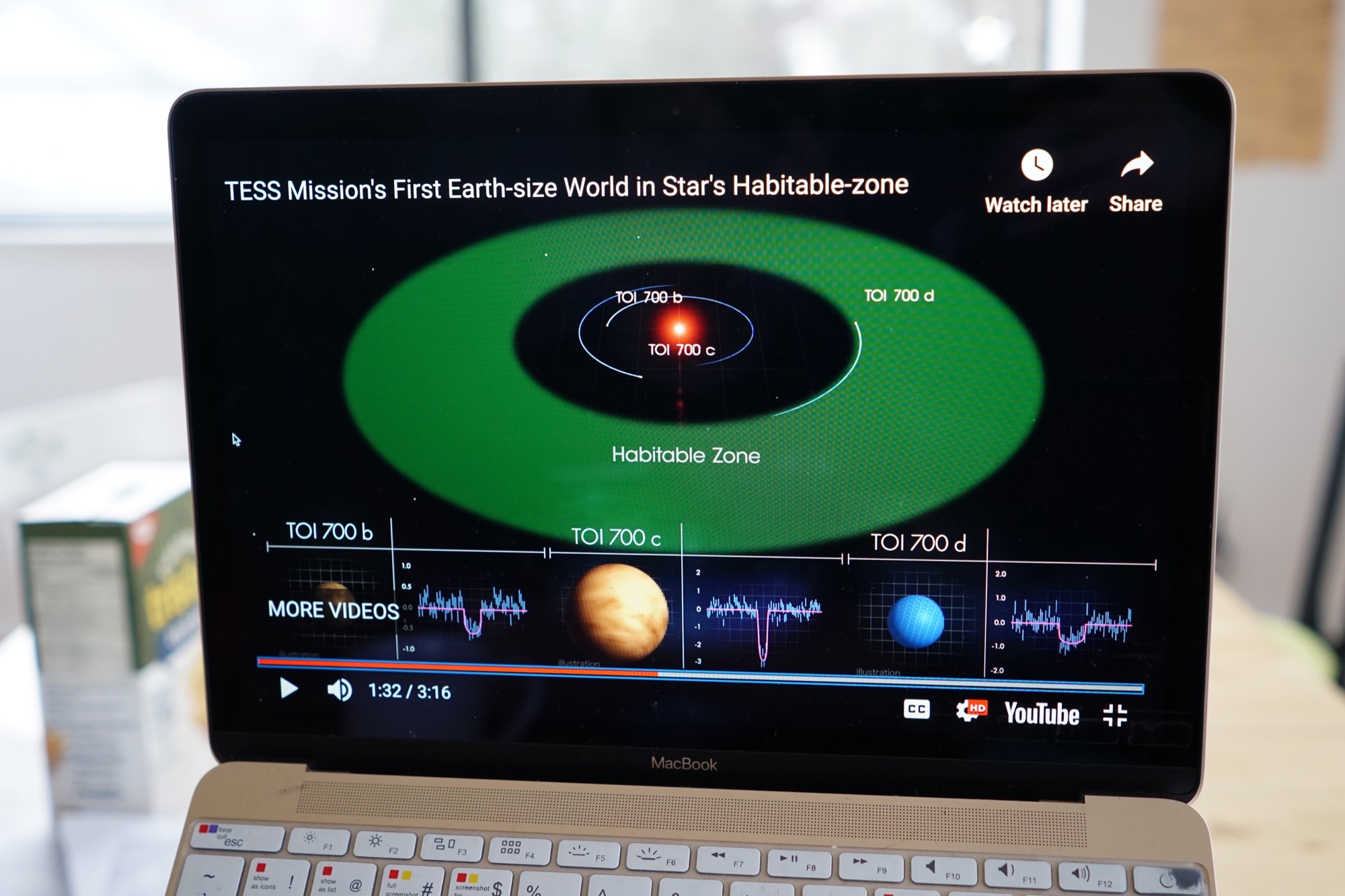
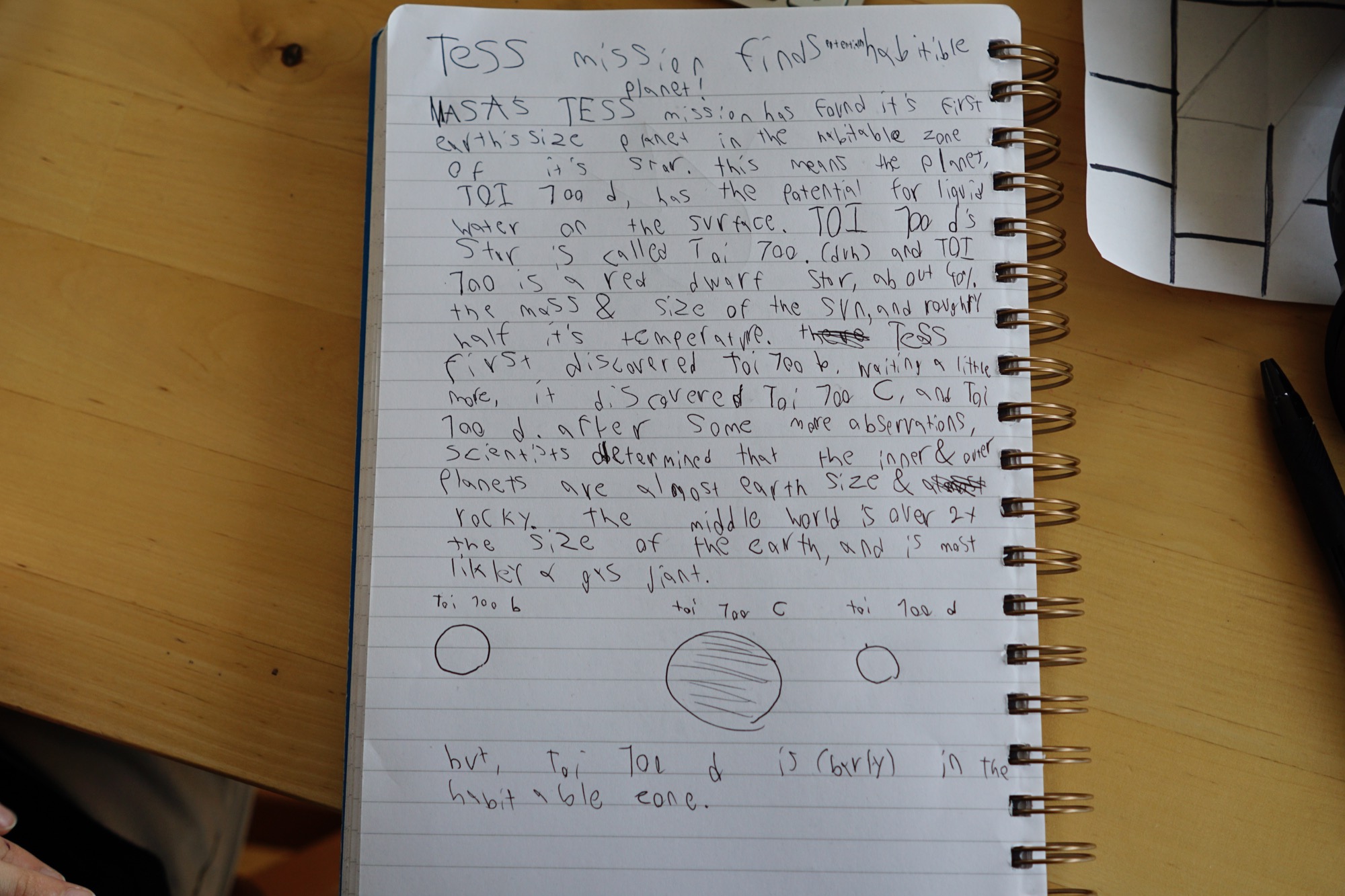
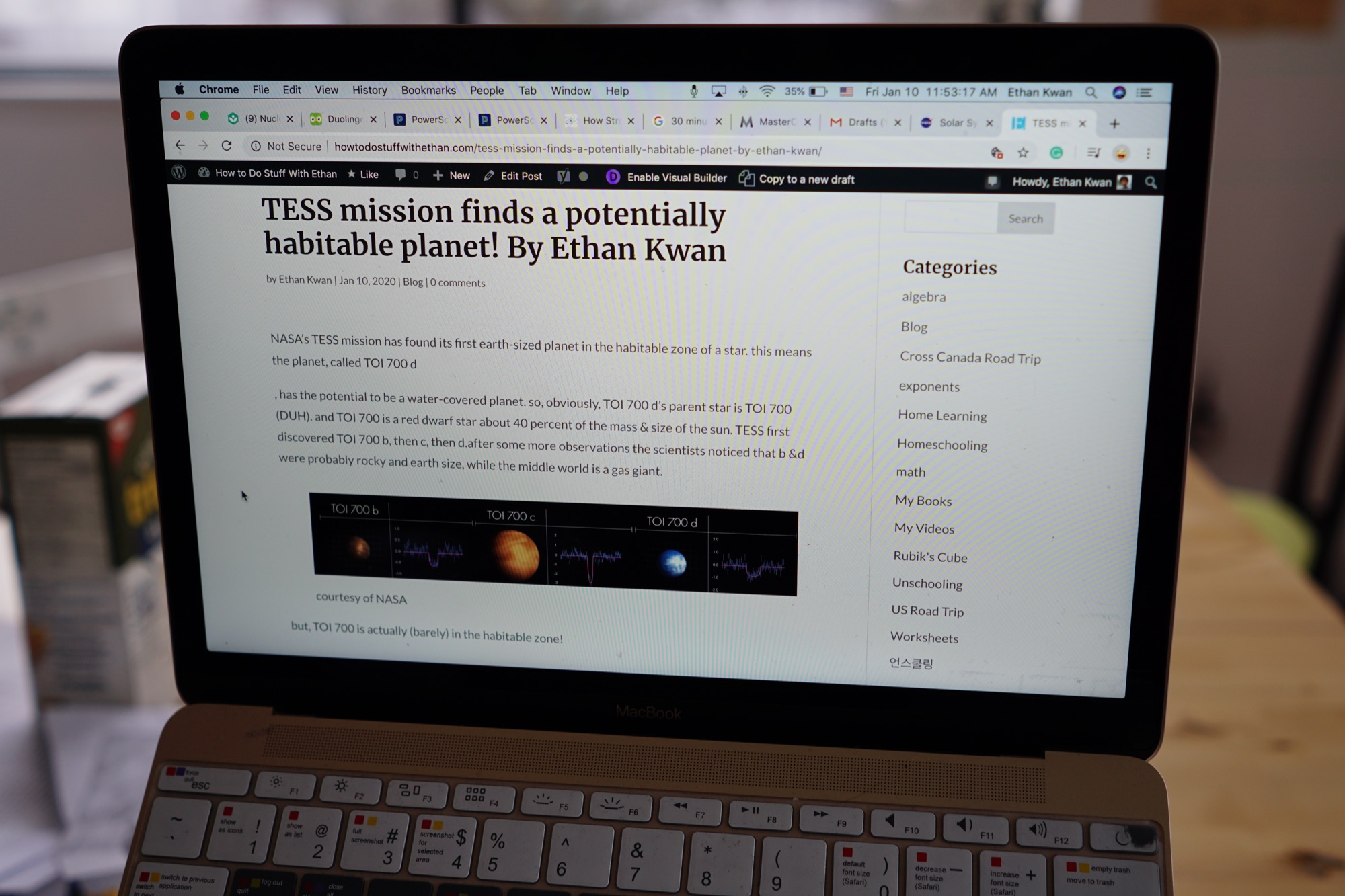
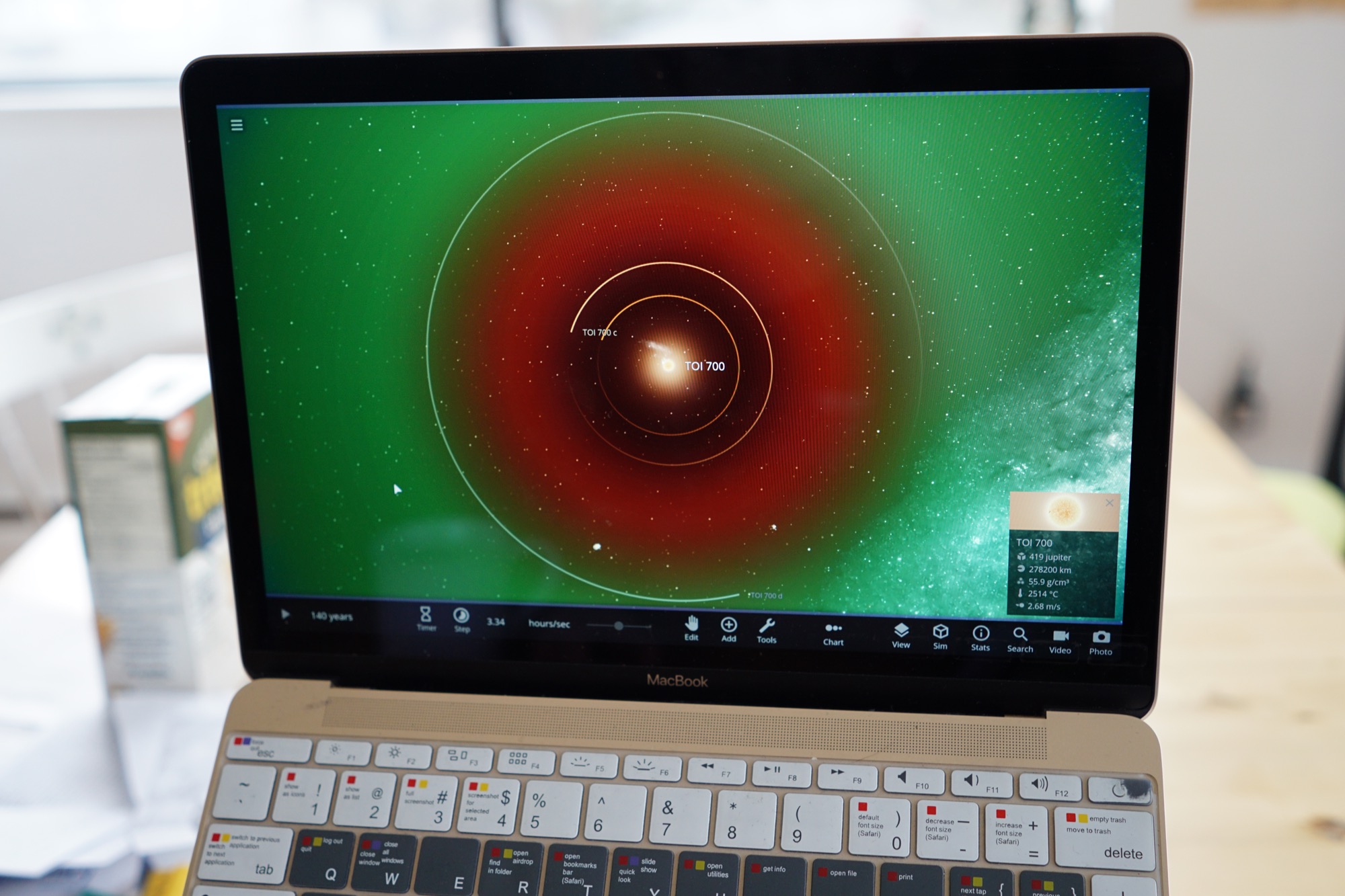
January 11
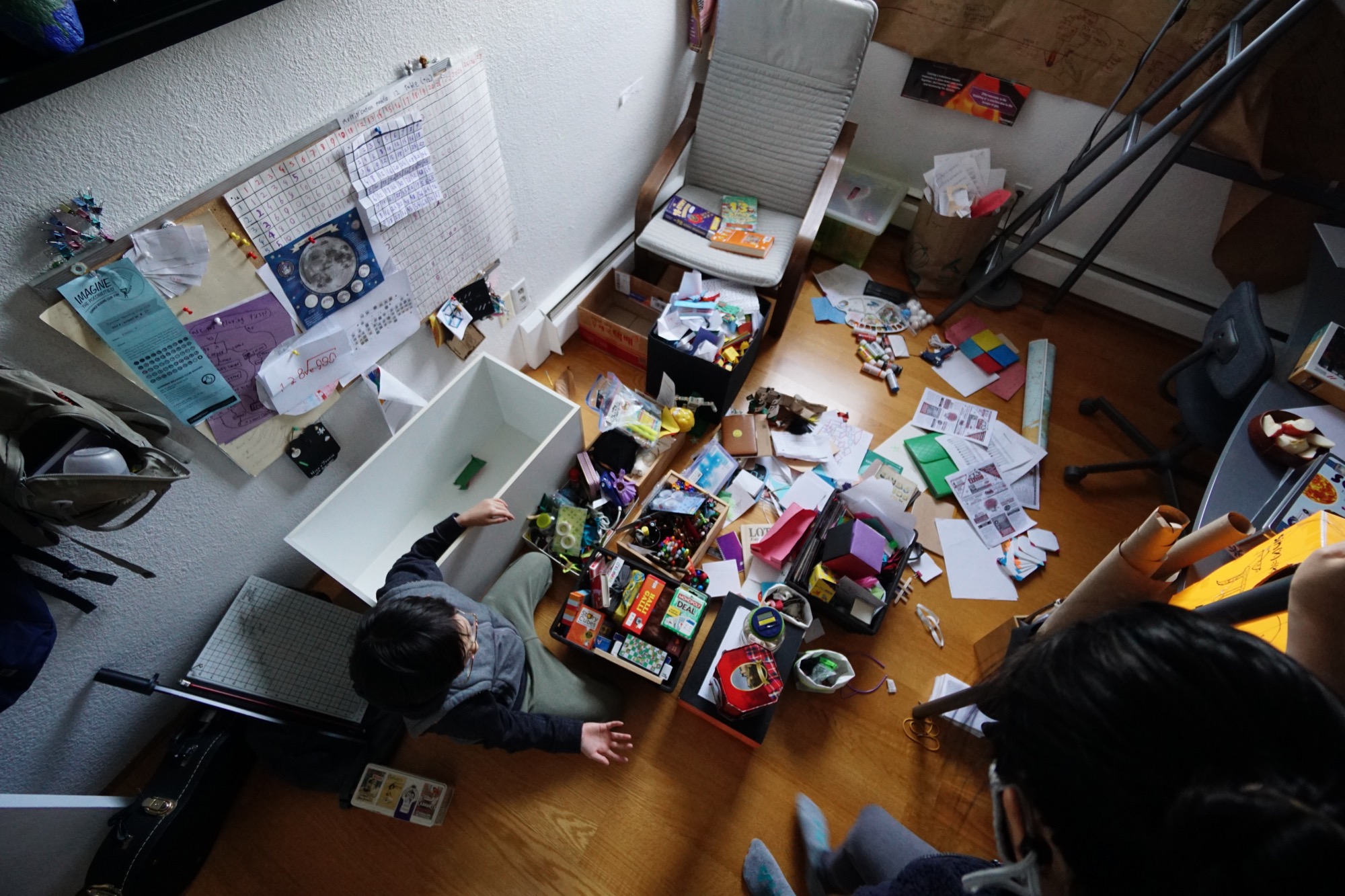
This week went by fast. Ethan was particularly excited about getting a new bed. He also did a great job of cleaning and organizing his room.
Hello Ethan and family.
It does look like you are back into the full swing of home learning again!
I will not be responding to this week’s observation in full as I am currently working on the Winter Connections. I look forward to reading what Ethan has to say were his highlights of the year so far as well as his future directions for the spring. I am so glad he is enjoying what I have been sending him. He can send this as an email or for Week 20 next week.
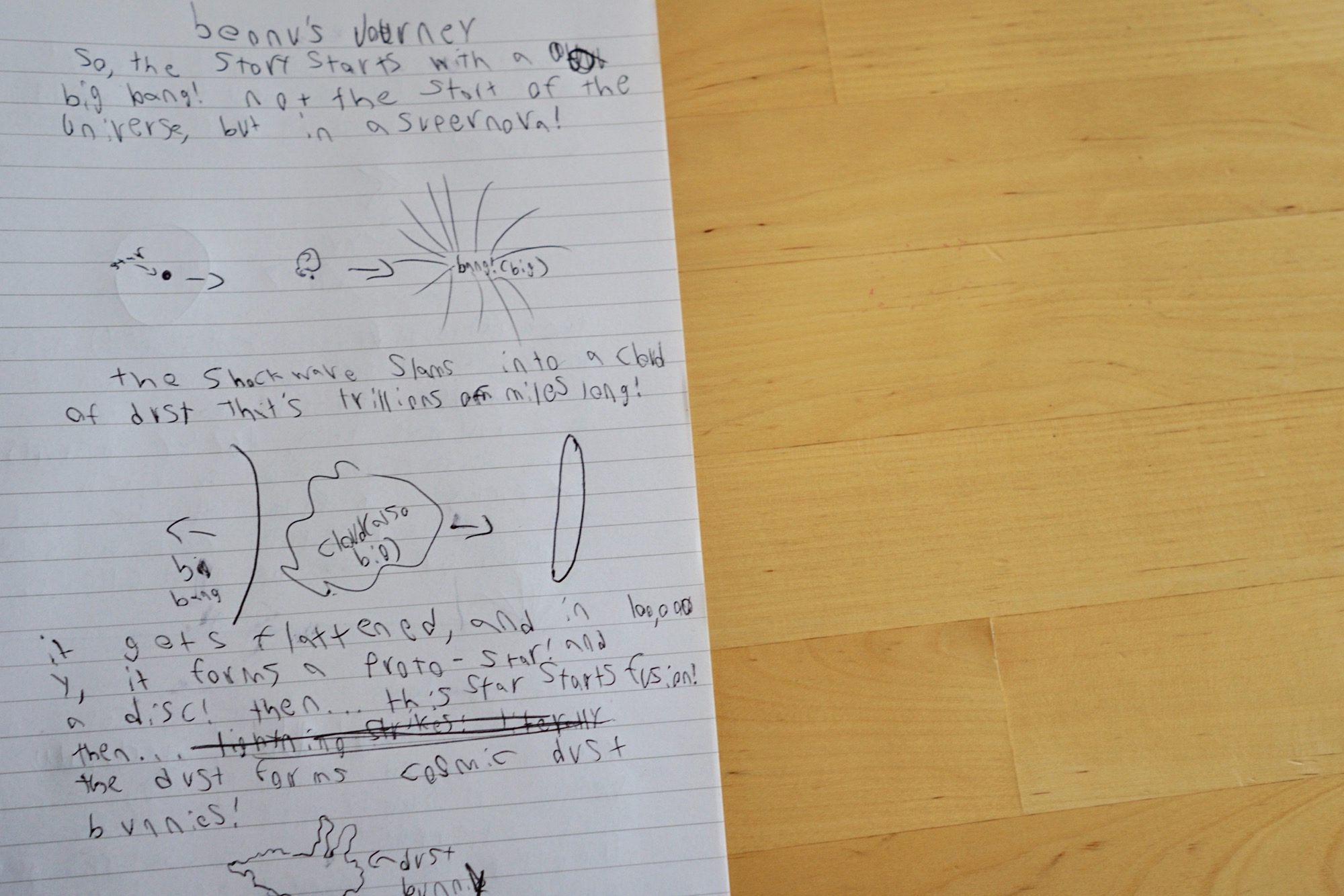
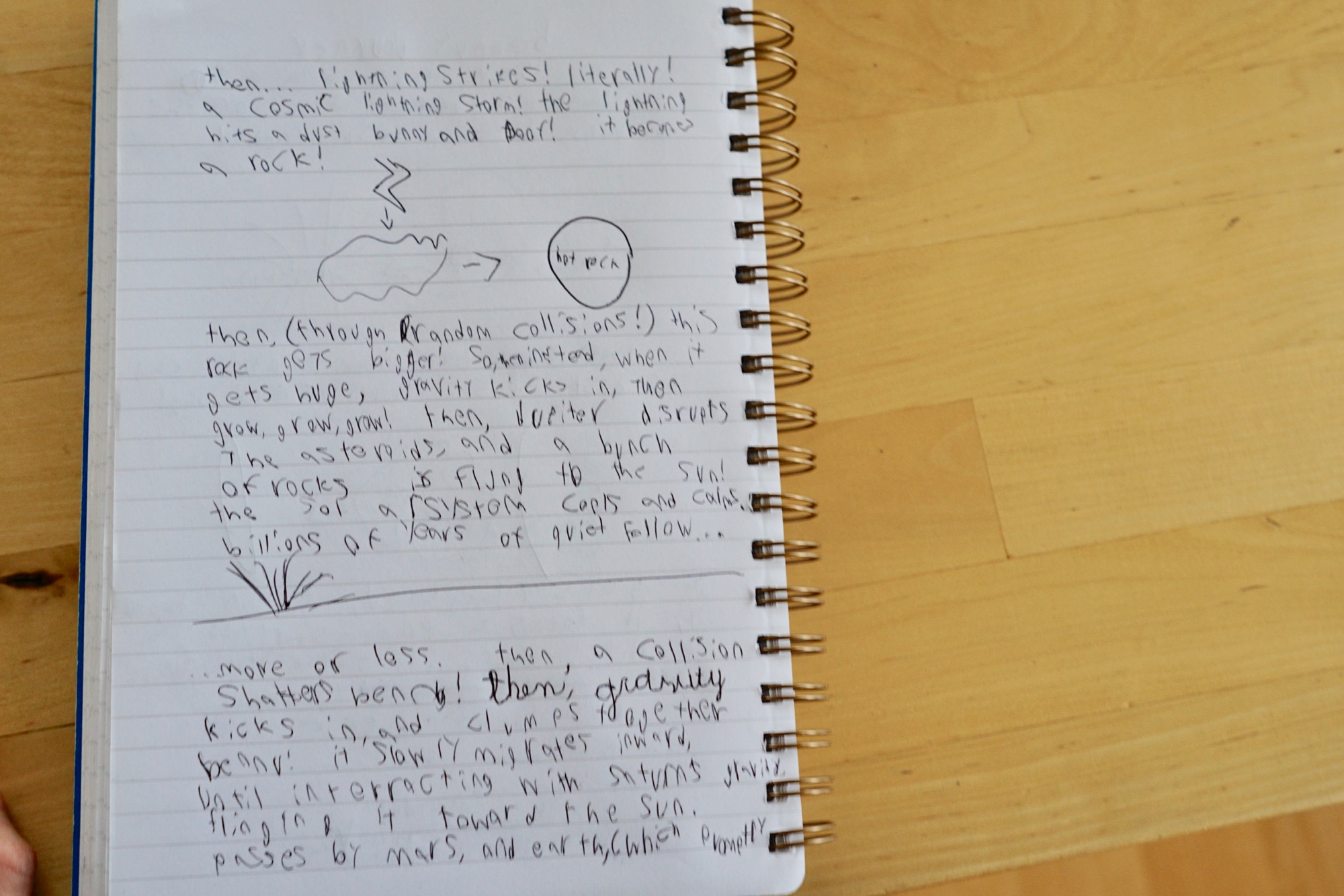
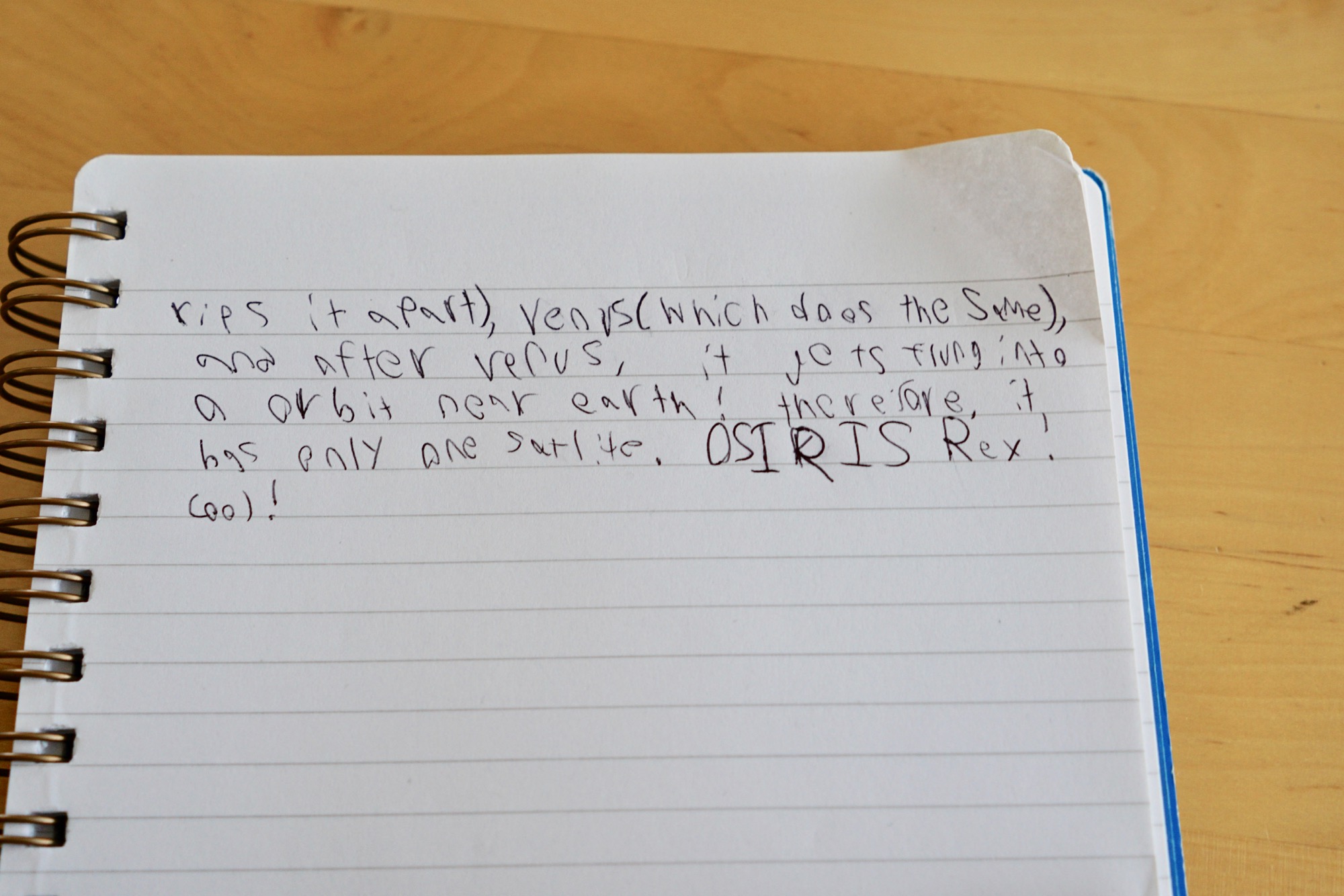
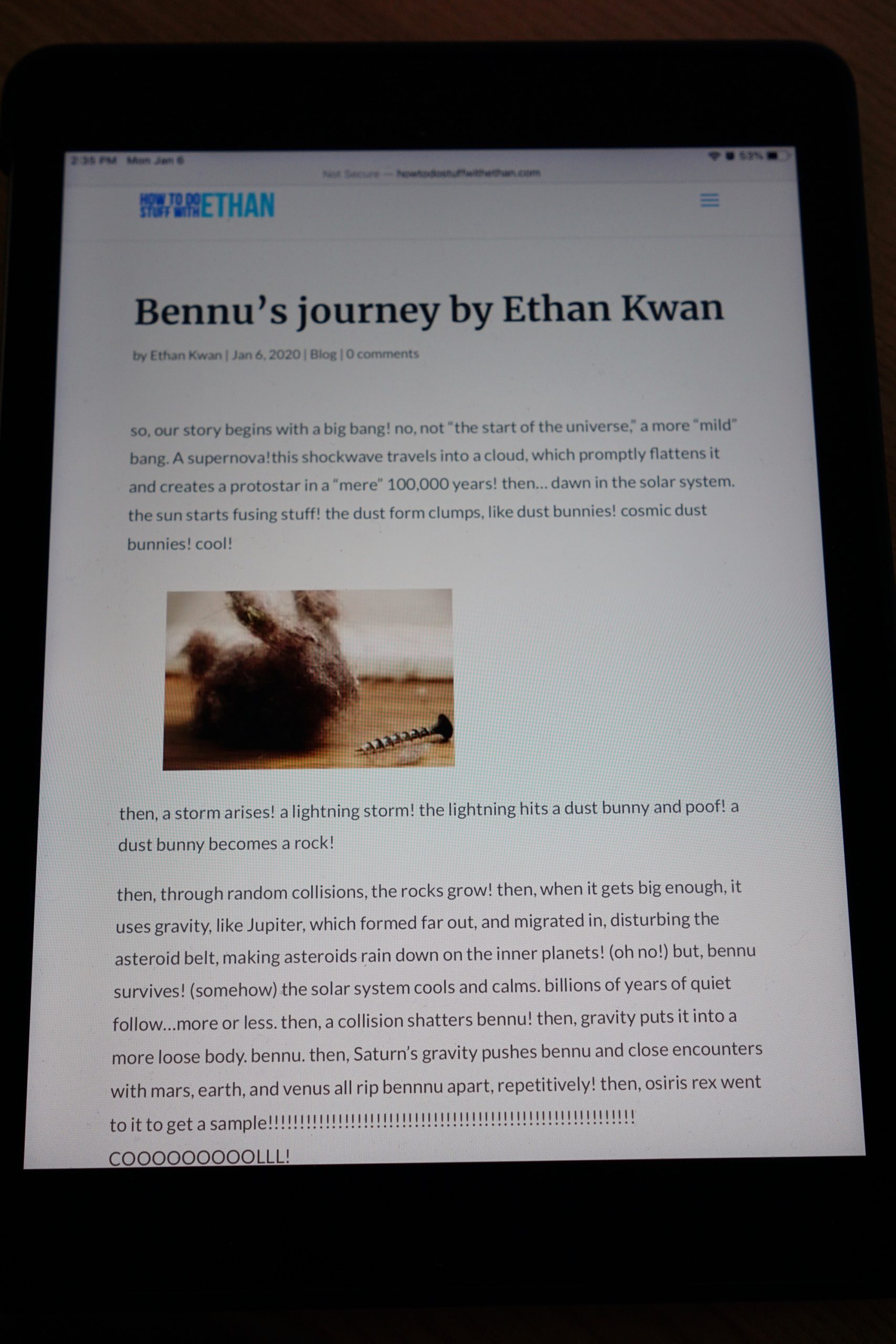
I just love the creative story Bennu’s Journey. It is such a fun way to explore and demonstrate his knowledge of astronomy and space history and as usual his humor and wit shines through.
A few comments, I notice in Ethan’s blog writing that he does not use capitals properly. I would encourage him to follow these basic grammar rules more closely before publishing. He does use punctuation in creative ways as well and a once over of the spelling errors would be good. Does ethan edit his work after he writes?
“Each step in the writing process is an important part of developing both fiction and non-fiction writing. “As you might expect, “writing process” refers to a series of concrete, discrete steps which you follow when carrying out a writing assignment. Although different versions of the writing process can be found—some with as few as three steps, others with as many as eight—they generally move from a writer-oriented stages of pre-writing through drafting to the reader-oriented stages of revising and editing. ”
If you are interested in learning more about the writing process, you may want to check out The Writing Process.

Ethan could start the editing process by using the basic CUPS method

A little bit more on Descartes:
René Descartes (1596-1650) was a scientist, mathematician and philosopher. He is regarded as the father of modern western philosophy, and is the man behind the statement Cogito ergo sum, translated as “I think, therefore I am”. So why should scientists know and care about him today? Because Descartes changed science by changing the way humans think about the natural world.
Before Descartes, doctors and scientists were trained to study the world through the lens of Aristotle’s works. They followed Aristotle’s philosophies on the cosmos and the soul, and believed that all matter was comprised of the four elements (earth, water, air and fire), which corresponded with the four humours of the human body (black bile, phlegm, blood and yellow bile). An imbalance in the humours was thought to cause illness, so doctors would try to treat sick patients by balancing the humours, leading to practices such as bloodletting.

These scientists and doctors sought to understand nature by studying the cosmos and the soul, but Descartes argued that we can never know what the soul is. Instead, Descartes thought to study life by studying the mechanisms behind it. His Discourse on Method (1637) encouraged scientists to question and test hypotheses through the use of experimentation and deductive reasoning.
Descartes was responsible for a paradigm shift in how humans think. It was Descartes who instructed scientists to focus on fact, not on the abstract, paving the way for modern science.
Recent Comments