
Scientists using an instrument aboard NASA’s Mars Atmosphere and Volatile EvolutioN, or MAVEN, spacecraft have discovered that water vapor near the surface of the Red Planet is lofted higher into the atmosphere than anyone expected was possible. There, it is easily destroyed by electrically charged gas particles — or ions — and lost to space.
“We were all surprised to find water so high in the atmosphere,” said Shane W. Stone. “The measurements we used could have only come from MAVEN as it soars through the atmosphere of Mars, high above the planet’s surface.”
Stone and his team tracked the abundance of water ions high over Mars for more than two Martian years. In doing so, they determined that the amount of water vapor near the top of the atmosphere at about 93 miles, or 150 kilometers, above the surface is highest during summer in the southern hemisphere. During this time, the planet is closest to the Sun, and thus warmer, and dust storms are more likely to happen.
Beneath is a graph, showing this fact.
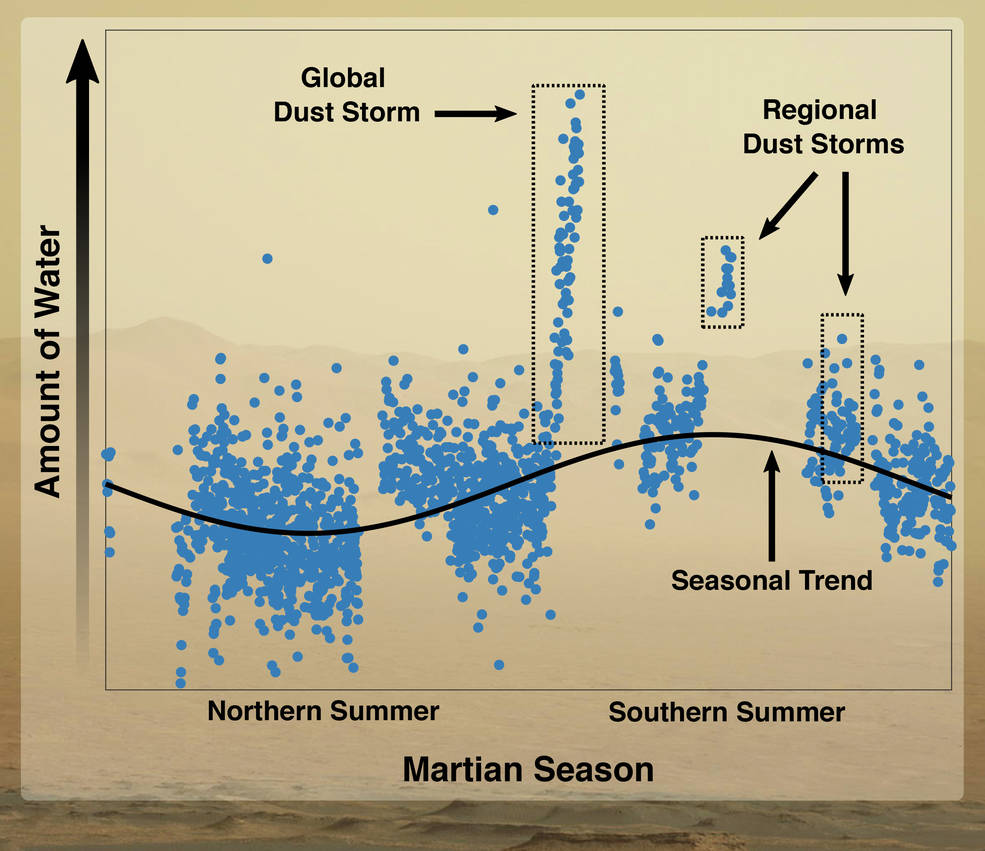
Credits: University of Arizona/Shane Stone/NASA Goddard/Dan Gallagher
Recent Comments